
Ambitious co-housing plan for former children’s hospital
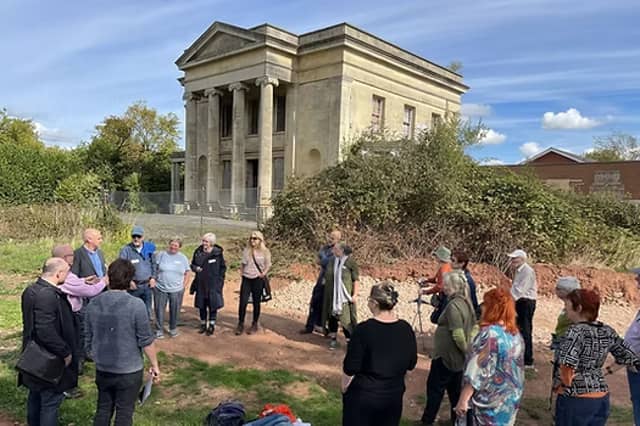

The council is considering an ambitious co-housing plan for the former children's hospital, which could provide smaller homes for older people, but has attracted objections from neighbours who fear disruption and loss of privacy.
An ambitious Exeter housing project hopes a new community living scheme on the site of a former children’s hospital in the city will attract older people who want smaller homes.
But objectors to the planning application for Honeylands House say their homes will be overlooked and the project will be disruptive.
Development partners Cohousing Exeter and AspenHof say their proposed ‘co-housing’ community is meeting a need for older people who want smaller homes closer to friends and family.
Co-housing differs from the current co-living trend in that while both combine private living space with shared communal areas, co-housing is typically a long-term, resident-led community with self-contained homes.
Co-living is usually a professionally managed rental model with private bedrooms or studios and bundled amenities.
The Honeylands House application is for 35 homes for people aged 55 and over, with the Grade Two listed house becoming a meeting place. Prospective residents have already helped the architects shape the layout and gardens.
Most of the homes would be single-level flats, with a smaller number of houses. Neighbours could use the shared kitchen in Honeylands House whenever they wanted to cook and eat together.
The group is also exploring guest accommodation, which it says could make it easier to give up a spare bedroom and still have family to stay.
Provisional guide prices are around £300,000 for a one-bedroom flat and £400,000 for a two-bedroom flat. The first homes could be ready by the end of 2028 if planning permission is granted by the city council.
The current Honeylands House dates to between 1801 and 1838 and was built for lawyer John Bushell. It had three reception rooms, six bedrooms, two servants’ rooms, stables, a coach house, laundry and farm buildings in 47 acres with pastures and orchards.
In January 1923 it was bought by the Torquay tobacco heiress Miss Violet Wills for £5,000, and she donated it to Exeter City Council to be used as a sanatorium for children suffering from tuberculosis.
It later catered for children with learning difficulties., but was closed down in 2012. Planning permission was granted in 2022 for conversion to a care home, but this was never completed.
The latest application has attracted a number of objections, among them one from the chief executive of neighbouring Vranch House, a specialist centre which supports children with physical disabilities and complex needs.
Kate Moss told the BBC: “We’ve got 65 children here with significant physical difficulties who are on ventilators, have severe epilepsy, and it’s the proximity of this building.
“We’re going to be massively overlooked. We provide a very safe environment for children and their families and this would be a massive encroachment on our safety and vulnerability.”
Cohousing Exeter is hosting an online introduction to the scheme on January 19 at 5.45pm. Click www.cohousingexeter.com/register for details.