
Exeter among England’s worst areas for rough sleeping as numbers hit record high
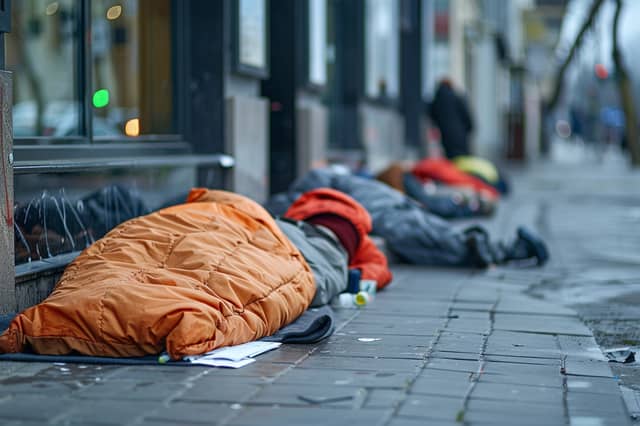

Exeter has recorded a 14 per cent increase in rough sleeping compared to the same period last year, with the city's rate almost three times the national average.
Exeter has one of the highest rates of rough sleeping in England, with new figures revealing that the number of people sleeping on the city's streets reached record levels this summer.
Exeter recorded its highest monthly rough sleeping figures on record this summer, with 69 people sleeping rough during each of July and August, according to figures supplied by the Centre for Social Justice.
Although the number fell to 64 in September, it remained the highest recorded for that month, representing a 14 per cent increase on the 56 people recorded in September 2025.
The figures place Exeter 10th out of 296 local authorities in England for its rate of rough sleeping.
At 46.4 people per 100,000 residents, the city's rate was almost three times the national average of 15.9 and more than double the South West average of 21.1.
Only nine local authority areas recorded higher rates, including the City of London, Westminster and Camden.
By the total number of people recorded sleeping rough, rather than the rate relative to population, Exeter ranked 43rd nationally.
The findings come as new government figures reveal that rough sleeping across England has also reached record levels.
Data published by the Ministry of Housing, Communities and Local Government on Friday, November 27, shows an estimated 9,798 people were recorded sleeping rough nationally during July, the highest monthly total in the series.
In September, the figure stood at 9,369, an increase of 77 people, or approximately one per cent, compared with the same month last year.
Exeter's annual increase of 14 per cent was therefore considerably higher than the national rise.
The figures measure the number of people estimated to have slept rough at some point during each month, rather than the number sleeping on the streets on a single night.
They are based largely on information gathered by local authority outreach teams and other services, and do not represent the total number of people experiencing homelessness, including those in temporary accommodation or staying with friends and family.
The figures have been highlighted in a new report from the Centre for Social Justice, which warns that rough sleeping is becoming increasingly entrenched across England.
Its Rough Sleeping Tracker report found that long-term rough sleepers now account for the largest group of people recorded on the streets nationally.
In September, an estimated 3,591 people were sleeping rough long-term, representing 38 per cent of the national total and an increase of six per cent compared with September 2025.
Under the Government's definition, long-term rough sleeping refers to people who have been seen sleeping rough in at least three months during the previous year.
The report raises concerns about the challenges facing people who have been sleeping rough for extended periods, including drug dependency and difficulties accessing suitable accommodation.
It also highlights concerns about people leaving prison without secure housing and the pressures facing homelessness services.
The CSJ is calling for a greater focus on Housing First, an approach that provides people experiencing long-term homelessness with settled accommodation alongside ongoing support.
The organisation argues that expanding the model could create up to 3,000 additional placements nationally through the Government's Rough Sleeping Programme.
Paula Barker, Labour MP and co-chair of the All-Party Parliamentary Group for Ending Homelessness, welcomed the report's recommendations.
She said: “The Prime Minister knows better than anyone what Housing First can achieve, and the new Rough Sleeping Programme is an ambitious first step. But like governments before, the new funding sets no explicit requirement for local areas to scale up Housing First.
“I welcome this report by the CSJ, which shows how the government can deliver up to 3,000 new Housing First places within the Rough Sleeping Programme. Only by investing in the interventions that work can we end rough sleeping for good.”
Josh Nicholson, Head of Housing and Communities at the Centre for Social Justice, said the national figures should prompt urgent action from ministers.
“These figures should set alarm bells ringing in Number 10,” he said.
“The Prime Minister deserves credit for raising the ambition on rough sleeping, but he must go further and faster to overhaul a Whitehall machine too comfortable with the status quo.”
The Government has introduced a new Rough Sleeping Programme, providing funding over three years to help people access accommodation and specialist support.
However, the CSJ argues that more emphasis should be placed on long-term housing solutions rather than temporary accommodation alone.
The Exeter figures underline the scale of the challenge locally, with the city recording a substantially higher rate of rough sleeping than both the South West and England as a whole.