
Devon recycles more than 63,000 tonnes of waste
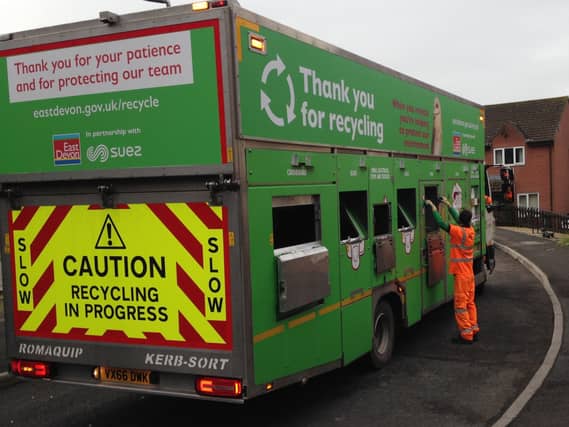

Devon County Council recycled more than 63,000 tonnes of materials in a year through its household waste recycling centres – the equivalent of about 30,000 family cars.
The county’s 19 centres received 80,421 tonnes of recyclable material and disposable waste in the last financial year, 78 per cent of which was recycled.
A spokesperson for the council said that the tonnage of recycling was reported to the Department for Environment, Food and Rural Affairs (Defra).
“Once a load delivered to a reprocessor/recycler is agreed as being acceptable for inclusion in a recycling process, the tonnage is recorded at that point,” the spokesperson said.
“There will always be some elements in the various recycling streams that are removed during the recycling process (e.g. plastic bags in garden waste or Sellotape on cardboard) but this is not counted in the Defra agreed recording process.”
The data, requested by the Local Democracy Reporting Service, shows how much of each material is recycled.
Garden waste tops the list at more than 21,000 tonnes, while wood and timber was the second most recycled material at 11,772 tonnes.
The council said its recycling rate hit almost 55 per cent for the 2023/24 financial year.
This figure, which also includes kerbside recycling as well as its recycling centres, is up half a per cent on the previous year and means the county has the second highest recycling rate in the country.
Kerbside recycling is collected by Devon’s eight district councils, and the recycling data also includes Torbay.
East Devon has a 60 per cent recycling rate, making it the sixth-highest performing waste collection authority (WCA) in England, narrowly behind top-performer South Oxfordshire (62 per cent).
Exeter City Council was the eighth highest for the least amount of household waste collected per person.
Cllr Roger Croad, Devon County Council’s cabinet member responsible for overseeing waste services cheered the figures, but said the authority would still look to improve.
“I think we can do even better, and I want to remind the public of the importance of ensuring that they separate out their waste for both their kerbside collections and when they visit a recycling centre ensuring that all metal is placed in the metal skip for instance,” he said.
“The less residual waste we have the higher our recycling rates will be, and the lower our costs.”
Material recycled
Total (tonnes)
Glass
819
Paper
430
Card
3515
Cans
10
Textiles
630
Metals (Ferrous)
5157
Metals (Non Ferrous)
63
Wood & Timber recycled
11772
Wood & Timber recovered
5585
Green
21382
Plastics (Mixed bottles)
84
Plastics (Bulky Hard)
1075
Engine Oil
80
Cooking/Veg Oil
17
Gas Bottles/Canisters
48
Car Batteries
164
Domestic Batteries
27
Household Goods/Bric-a-brac
1327
Flat Glass
567
Printer Cartridges
2
Tetrapaks
Crockery
421
Upvc
23
Fridges/Freezers
1320
Display Equipment
583
Gas discharge Lamps
12
Large Household Appliances
1340
All other WEEE
3225
Hazardous***
34
Plasterboard
608
Tyres
Asbestos***
107
Soil and Rubble
3004
General/Residue***
16958
Total
80421
N.B. *** = Non-recyclable waste