
Devon MP demands urgent investment for ageing West of England rail line


A rail replacement bus service has been confirmed for the West of England line, as Devon MP Richard Foord warns disruption could worsen when schools and colleges return in September.
South Western Railway has not given a timescale for longer-term fixes to the West of England line, including new trains and further track upgrades, as a Devon MP calls for urgent investment following a second year of serious disruption.
Richard Foord, MP for Honiton & Sidmouth, has written to the Transport Secretary, Heidi Alexander, demanding the Government prioritise the line, which includes stations at Axminster, Honiton and Feniton, after services were seriously disrupted for the second year in a row due to the track bed drying out.
Last year, the so-called soil moisture deficit problem lasted around three months, causing widespread disruption. Mr Foord said he had received dozens of complaints from constituents unable to get to work or college because of a reduced, unreliable two-hourly schedule, with others describing being crammed onto three-carriage trains that should have six.
Mr Foord said the line, one of only two rail links between London and the West Country, had become mired in chaos for the second year running due to the effects of climate change, while other routes such as HS2 and Northern Powerhouse Rail had received billions of pounds in investment.
He said the disruption could not be allowed to happen for a third of the year, or every year, without becoming what he called an international embarrassment and an annual disaster for business, tourism and education.
Mr Foord said new passing loops between Exeter and Salisbury would allow an hourly service to continue running even during disruption, and could enable a half-hourly service in normal conditions. He said he wanted funding for the loops to be made a key priority, and would press the case in Westminster next month.
Exeter Today asked Mr Foord's office whether South Western Railway had confirmed the rail replacement bus service he had requested. His office confirmed the operator has agreed to provide this.
Asked how this year's disruption compared with last year's three-month disruption, Mr Foord's office said it was difficult to tell at this stage, as it remained early days. They said the situation was expected to become much more challenging when schools and colleges return in September.
In an update to its website this month, South Western Railway set out the scale of the challenges facing the line.
The operator said the line's 124 miles between Basingstoke and Exeter St Davids are not electrified, and around 60 miles are single track, severely limiting how services can be run. With only six places for trains to pass each other, the operator said even a minor delay to one train could quickly cascade into major delays across the route.
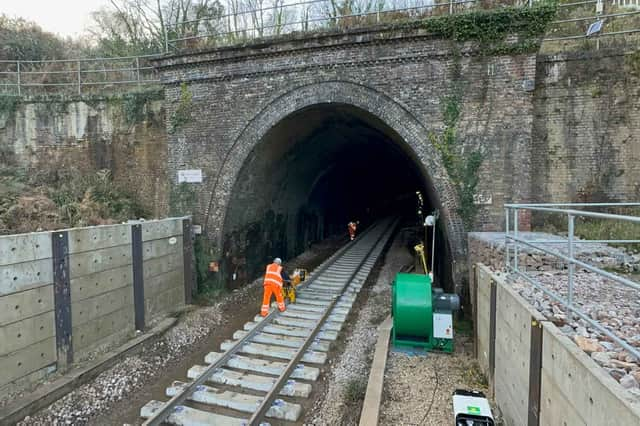
South Western Railway said the line was particularly vulnerable to climate change because of how it was built in the mid-1800s, using excavated soil to construct embankments without the benefit of modern geotechnical knowledge. The high clay content of soil in the South West means it expands in wet conditions and shrinks during dry and drought conditions, a process known as soil moisture deficit, which can crack the ground and disrupt precise track levels.
The operator confirmed it introduced a temporary timetable in late July, following further heatwaves and the declaration of a drought, to limit disruption while it works on the line. It said work carried out since the 2025 soil moisture deficit event, including 5,000 tonnes of new ballast and the removal of more than 200 dead and diseased trees, had allowed it to reduce journey times in this year's amended timetable by around 30 minutes compared with last year.
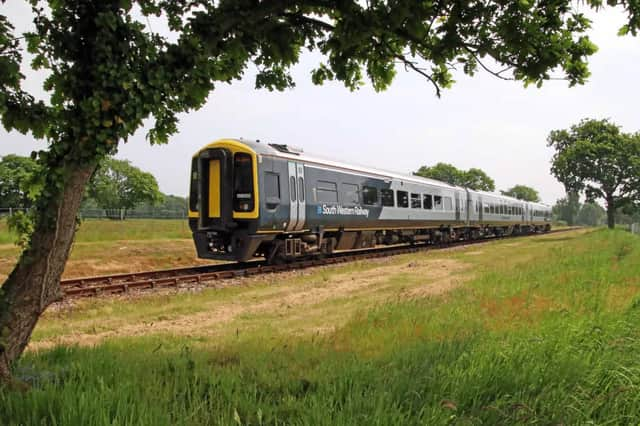
On its trains, South Western Railway said its Class 158 and 159 fleet, in operation since the late 1980s, was nearing 40 years old. It said longer-term plans to replace the fleet are being developed, but will need to align with a national rolling stock strategy still being drawn up for Great British Railways, which it said was due to be published soon.
The operator said recent months had seen increased maintenance issues affecting train availability, including problems with engine parts and wheelsets failing earlier than expected, compounded by global supply chain delays affecting replacement parts. It said this could mean services running with fewer carriages than normal.
South Western Railway also acknowledged that the fleet's air conditioning systems, designed around 40 years ago, can become less effective or fail entirely in extreme heat. It said it could not change the systems' fundamental design capability, though it aims to mitigate the impact through consistent maintenance and measures such as closing blinds and providing bottled water when systems are not working.
The operator said it was developing a long-term, "whole system" plan for the line covering services, trains and infrastructure, which it said could potentially include additional double-track sections. It said it was working with local stakeholders and the Department for Transport to develop the strongest options for further investment, though no timescale was given for when this work would be complete.