
Polish squadron’s bravery remembered through Exeter exhibition


The Polish squadron played a crucial role in defending Exeter during the Blitz, shooting down German bombers and saving the city from further devastation.
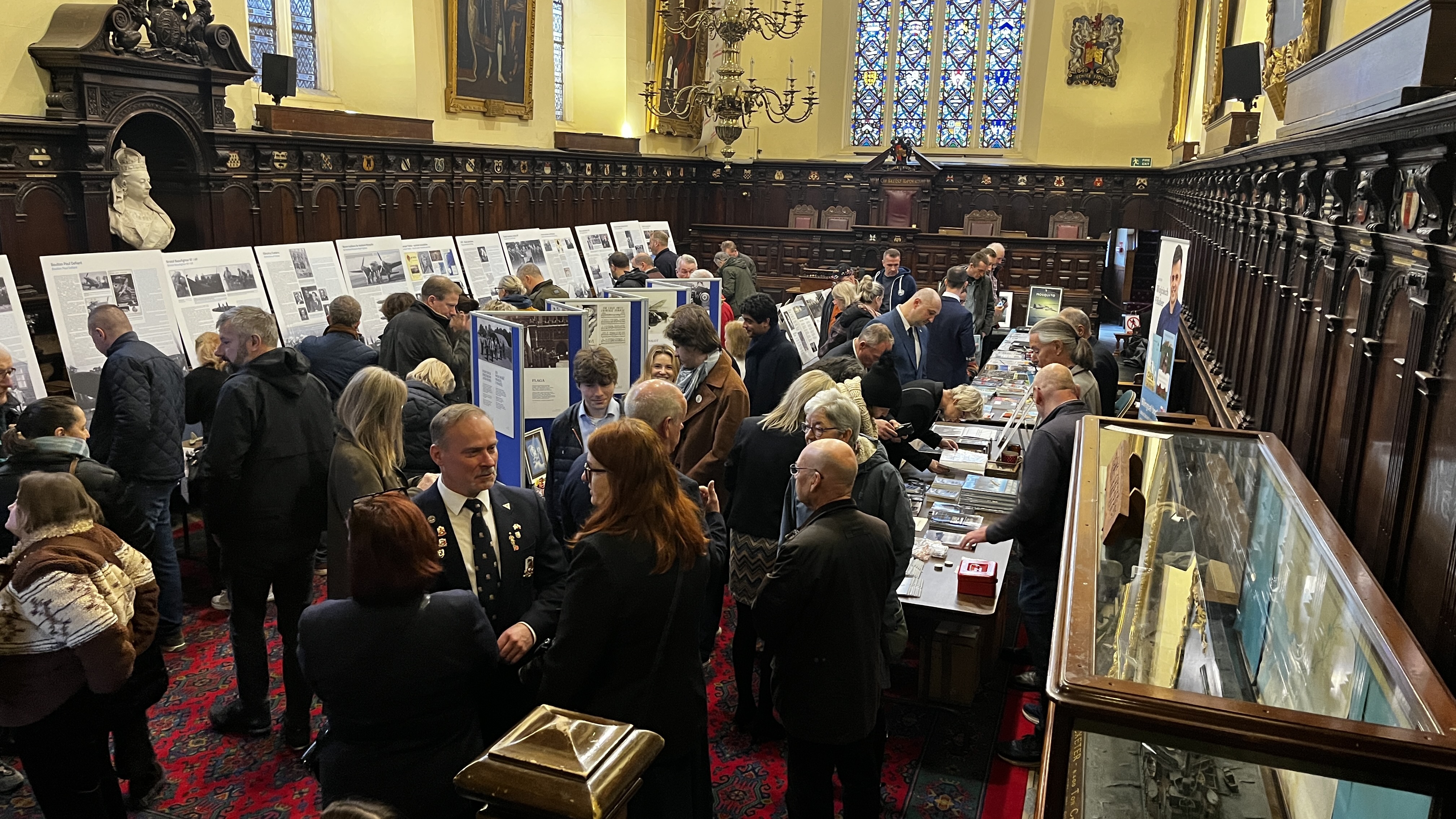
The heroic story of a Polish squadron who helped defend Exeter during the Blitz returned to the city last weekend through a memorial exhibition.
The event, held at Exeter’s Historic Guildhall on November 14 and 15, brought together representatives from both British and Polish organisations, and was well-attended by relatives of the squadron and those interested in learning more about its history.
The Polish flag was first raised over Exeter in recognition of the 307 Squadron’s bravery on November 15, 1942. The squadron was based out of RAF Exeter from 1941 to 1943, and defended the city from overnight enemy air raids.
As part of this year’s remembrance, on November 15, 2026, the Lord Mayor of Exeter, Councillor Gemma Rolstone, raised the Polish flag above the Guidhall.
Michael Parrott, founding member of the 307 Squadron Project - the organisation that coordinated the exhibition, told Exeter Today: “On the main night of the Exeter Blitz - the third and fourth of May 1942 - Exeter was attacked by 40 German bombers.
“For various reasons, Exeter’s only defence that night was the Polish 307 Squadron who had four aircraft to defend the city against 40 enemy bombers.”
The squadron was formed in Britain in 1940 as part of an agreement between the Polish Government and the United Kingdom. It was the only Polish night fighter squadron to serve alongside the Royal Air Force during the Second World War.
“During the raid, the squadron managed to shoot down four of the enemy [German] bombers, shooting them down before they could drop their bombs on the city below,” said Mr Parrott.
“Even though the devastation to buildings and loss of life was very large in Exeter, had it not been for the Polish 307 Squadron, imagine four more planes of bombs dropping - the devastation would have been greater, as would have been the loss of life.”
It is understood Exeter was targeted by Germany, in part, due to the city’s cultural and historical significance. Its raid destroyed around 30 acres of Exeter on the night of May 3, 1942, including 1,500 homes, part of the Cathedral, and the City Library.
156 residents lost their lives and 583 were injured.
“The squadron became very well-known in the city following the blitz,” Mr Parrott continued.
“They themselves had arranged social events in the city after the war to raise money for residents who had lost their businesses or their homes.
“Exeter was very grateful.”
Mr Parrott, along with other trustees of the 307 Squadron Project, now work to ensure every November 15 is known as ‘307 Squadron Day’ to honour the memory and legacy of the 21 Polish squadron members who gave their lives for the city.
This year’s exhibition showcased a wide range of memorabilia and the personal stories of squadron members.
“It’s so special to have the story of the squadron back here for another year,” said Mr Parrott.
“It’s special because we know the squadron were here in this particular building [Exeter Historic Guildhall].
“The fact that every year we can hold an exhibition here where members of the public can come in and see a hugely important part of Exeter’s combined Polish and British history is incredible.”
You can find out more about the Polish 307 Squadron, known as the ‘Lwow Eagle Owls’, here.