
Double lucky: Exeter stargazers set for stunning Perseid meteor shower after UK eclipse
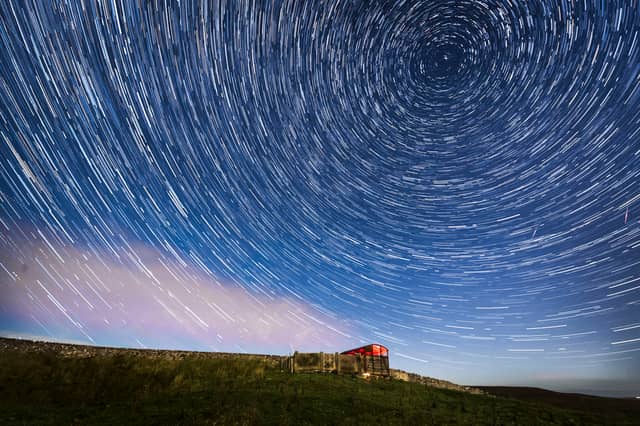

Devon skywatchers who caught Wednesday's partial solar eclipse have a second treat in store, as the Perseid meteor shower reaches its peak overnight between Wednesday and Thursday.
Stargazers across Exeter and Devon could be in for a rare astronomical double this week, with the stunning Perseid meteor shower reaching its peak just hours after the UK's partial solar eclipse.
The Perseids, one of the most dramatic meteor showers of the year, are active between 17 July and 24 August, with the number of meteors building night by night before peaking overnight on 12-13 August.
The best viewing window falls between midnight and 5.30am, although some meteors may be visible as soon as the sun sets, since the shower's radiant point remains above the horizon throughout the night in the UK. At its peak, the display can produce up to 150 meteors an hour, many of them bright and fast-moving with visible trails.
This year's peak coincides with a new Moon, meaning there will be little natural light pollution from moonlight to drown out fainter meteors, giving skywatchers close-to-ideal conditions to catch the display.
The Perseids are caused by the Earth passing through debris left behind by comet 109P/Swift-Tuttle. As the debris burns up in the atmosphere at speeds of around 36 miles per second, it creates the bright streaks of light associated with the shower, with larger fragments capable of producing fireballs.
For those in and around Exeter hoping to catch the display, experts recommend getting away from street lights and other sources of light pollution where possible, and allowing at least 15 minutes for eyes to adjust to the dark.
Devon's darker rural spots, including areas of Dartmoor and Exmoor, both recognised as International Dark Sky places, are likely to offer some of the best views in the region away from the city's light pollution.
The meteors will appear to radiate from the constellation of Perseus, though they can appear anywhere in the sky, so the more open sky visible, the better the chances of spotting one. Binoculars and telescopes are not needed and can actually restrict the field of view.
Anyone who managed to see Wednesday's partial solar eclipse now has the chance to witness two significant sky events within days of each other, an unusual pairing for stargazers in Devon.