
Exeter's Harlequins Shopping Centre almost disappears after more than 35 years
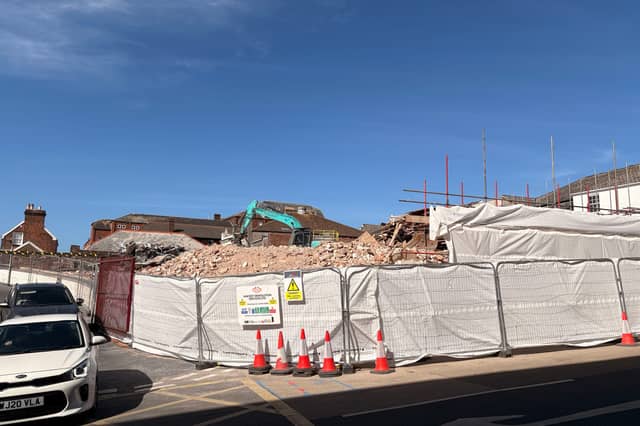

The Harlequins Shopping Centre, once hailed as the future of city shopping, has almost disappeared after more than 35 years of decline, with demolition work ongoing since the summer.
A landmark building in Exeter that was once hailed as the future of city shopping has almost disappeared.
Demolition of the Harlequins Shopping Centre has been going on through the summer, marking the final chapter for the derelict 1980s American-style indoor mall.
When it opened in 1987 on the site of the old Paul Street bus station it was described as ‘ground-breaking’, and boasted 32 individual shop units.
Rather than housing massive high-street corporate chains, which went to the neighbouring Guildhall or later Princesshay, Harlequins was marketed as a ‘continental-style’ marketplace aimed at independent, specialty, and niche boutique traders.
The lower retail tier was designed as an open-fronted, bustling market space and hosted custom art galleries, craft supplies, fashion boutiques and antique stalls. It became well-known for housing unique home decor, ethnic interior designs, and independent furniture showrooms, most notably long-term fixtures like Chandni Chowk, which sold ethically-sourced home furnishings.
Fast-food outlets and small, independent cafes occupied units near the main walkways, but the lower retail tier struggled with low footfall, and the centre went into a steady decline until its closure in September 2019.
Its pay-and-display car park permanently closed in June this year to allow heavy machinery to secure the site. The distinctive 1980s stained-glass footbridge spanning Paul Street, once dismantled, will not be replaced.
The site is being redeveloped by Guernsey-based developer Curlew Alternatives Property into a massive co-living housing complex featuring 383 studio apartments and flats across six and seven-storey blocks.
The aim is to provide a mixture of student accommodation and co-living for local people.
The initial 2022 planning approval required 20 per cent of the units to be designated as ‘affordable housing’ for key workers, but Curlew said soaring construction costs and interest rates meant that would not be possible on site, and they will pay the city council £2million towards affordable housing elsewhere in the city instead.
At the same time the developer confirmed that while early designs promised to replace the iconic footbridge with a modern version, the current proposal is not to replace it at all.