
Grade I listed historic Exeter Tudor property hits the property market
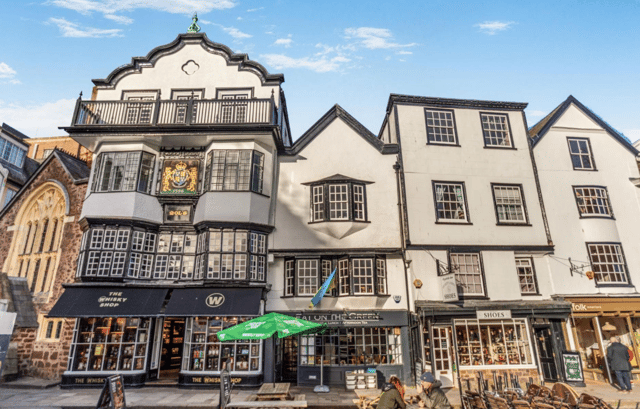

A rare Grade I listed Tudor property in the heart of Exeter’s historic Cathedral Quarter has been restored and placed on the market.
Mol's House, a famous late-medieval landmark with deep ties to the Reformation and Britain's early coffee house culture, has been converted into a unique two-bedroom luxury home.
The transition of the building from a historic asset into a private residence was celebrated at a launch event on 21 May 2026.
The property is currently being marketed by Fine & Country Exeter, a premium estate agency specialising in luxury, character, and high-value regional properties. Operating out of offices on Southernhay West in the city centre, the firm handles upper-market residential sales and historic properties across Exeter and East Devon, linking local heritage assets to a wider national and international buyer network.
A 'Golden Age' survivor
Originally constructed in the late-medieval period as part of the 1410 Annuellars' College for cathedral chantry priests, the site underwent a dramatic transition following the 1530s Reformation. It came into private ownership and was entirely remodelled in 1596 to serve as Exeter's Custom House during a period when the city grew wealthy through international maritime trade.
"It's not like a lot of buildings where you have to use your imagination to recapture the past, because a lot of it is still here," said local historian Todd Gray, speaking at the launch. He added that the structure "epitomises Exeter in its Golden Age".
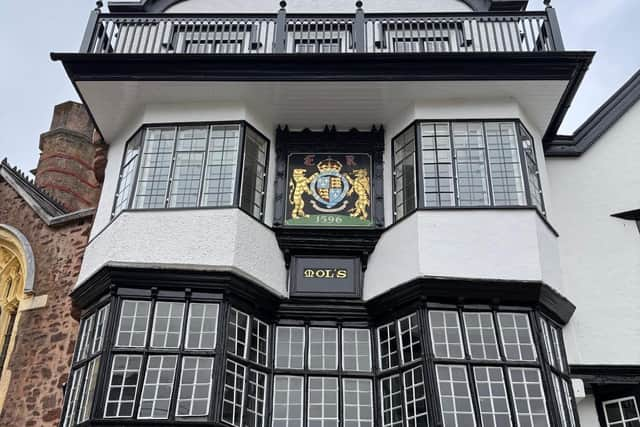
The building still features its original 1596 Royal Coat of Arms on the exterior facade. Inside, the main reception room, traditionally known as The Armada Room, retains its distinctive oak-panelled walls, deep-set oriel windows overlooking the cathedral lawns, and hand-painted coats of arms representing prominent Devonshire gentry.
Social and commercial history
In 1726, the building transitioned into one of Britain’s earliest commercial coffee houses, taking the name "Mol’s" after its first proprietor, Mary Wildly. The establishment became an influential meeting place for Exeter’s merchant class, businessmen, and elite.
Notably, historical records indicate the coffee house was run exclusively by successive generations of women for over a century until its eventual closure in 1829. In the 19th century, it was repurposed again to house a prominent local picture gallery.
Modern conversion
The building has recently undergone an extensive internal restoration to adapt the vertical, multi-floor layout for contemporary living while preserving its protected architectural features.
The layout now includes:
- Ground floor & lower levels: A courtyard entrance leading into the historic Armada Room, which now features a concealed bar area.
- Middle floor: Two double bedrooms, including a principal suite with underfloor heating and integrated skylights.
- Top floor: An open-plan kitchen and living area built into the vaulted roof, showcasing the original exposed timber beams and a historical cast-iron range set into brickwork.
Project architects noted that balancing modern residential amenities with the strict statutory protections of a Grade I designation presented unique engineering and preservation challenges. Only 2.5 per cent of listed buildings in England hold Grade I status, placing the property in the same heritage bracket as castles and cathedrals.