
Devon set for dramatic solar eclipse
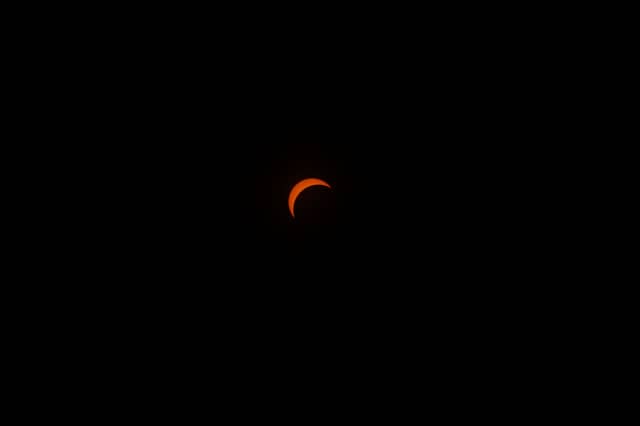

Exeter and the wider county will enjoy some of mainland Britain’s best views as the Moon obscures up to 96 per cent of the Sun
People across Exeter and Devon are being promised a front-row seat for one of the most dramatic solar eclipses visible from Britain in decades.
The Moon will pass in front of the Sun during the early evening of Wednesday, August 12, obscuring around 95 to 96 per cent of it when viewed from the South West.
The partial eclipse is expected to begin at about 6.18pm, reach its peak at 7.16pm and end shortly after 8pm.
Although Devon will not experience totality, the county will be among the best places in mainland Britain from which to watch the event. The deepest eclipse will be visible from Greenland, Iceland and northern Spain.
At its height, only a thin crescent of the Sun will remain visible from Devon. Daylight is expected to fade noticeably and temperatures may fall as the Moon blocks most of the solar disc.
In Exeter, people will need to find a safe location with a clear, unobstructed view towards the west. Elevated open spaces and locations on the western side of the city are likely to offer the best chance of seeing the low evening Sun, provided the weather remains clear.
Anyone travelling farther afield will have a choice of public events and some of Devon’s most dramatic landscapes.
Astronomers at the Norman Lockyer Observatory near Sidmouth are expected to have safe viewing equipment available, while Plymouth Astronomical Society will host a public viewing at Lowery Cross near Yelverton.
Dartmoor locations including Haytor, Hound Tor and Saddle Tor offer panoramic views, while Dunkery Beacon and the open plateaus of Exmoor provide wide horizons with little light pollution.
Devon’s west-facing beaches could be particularly well placed. Saunton, Woolacombe and Westward Ho! in North Devon, along with Bantham, Bigbury and Thurlestone in South Devon, should provide open views of the Sun as it descends towards the horizon.
However, visitors are being urged to park responsibly, avoid blocking roads and remain aware that popular viewpoints may become busy.
Eye protection will be essential throughout the event because the eclipse will not be total anywhere in Devon. Looking directly at even a small part of the Sun can cause permanent damage to eyesight.
Ordinary sunglasses, exposed photographic film and homemade filters do not provide adequate protection. Viewers should use undamaged eclipse glasses or solar viewers carrying the appropriate safety certification.
A pinhole projector can also be used to watch the event indirectly by projecting an image of the Sun onto a piece of card. Cameras, binoculars and telescopes must have specialist solar filters fitted over their front lenses and should never be pointed at the Sun without them.
The Royal Observatory Greenwich describes the August event as the closest the British Isles will come to a total eclipse for many years. The next total solar eclipse visible from the UK is not due until 2090.