
Could Exeter become a centre for defence technology?
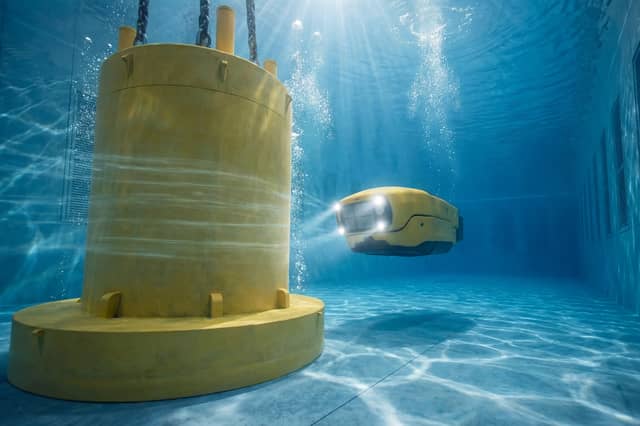

A proposed £150million testing centre could attract marine, aerospace and defence companies to the city, creating specialist jobs and a potentially controversial new identity for Exeter
Exeter could be poised to become an important centre for defence and underwater technology as plans advance for a vast testing facility on the edge of the city.
The proposed Extreme Environment Centre at Exeter Science Park would include an enormous water tank measuring about 60 metres by 40 metres and reaching depths of up to 30 metres.
Known as NauteXe, the facility would allow businesses and researchers to develop and test underwater drones, autonomous vessels, remotely operated vehicles and other equipment designed for challenging marine environments.
Although the project has wider scientific, environmental and commercial applications, it could also place Exeter firmly within Britain’s expanding defence technology sector.
Autonomous underwater vehicles are increasingly being developed for naval surveillance, seabed inspection, mine detection and the protection of subsea infrastructure such as cables and pipelines.
Exeter’s location could strengthen its appeal. The city is close to Plymouth’s naval and marine industries, while the wider South West already has expertise in aerospace, engineering, environmental science and maritime technology.
The University of Exeter could also provide research expertise and skilled graduates, while the science park offers links to the airport, M5 and A30.
Supporters believe the centre could generate more than £270million for the regional economy, with its longer-term impact potentially exceeding £500million. It could also create high-value engineering, scientific and technical jobs.
Exeter Science Park chief executive Lindsay Lucas has described it as a nationally significant project of strategic importance to the region.
However, the development could also spark a broader debate about Exeter’s economic identity.
The city is strongly associated with climate science, environmental research and efforts to reach net zero. A growing role in military technology may therefore attract questions about how defence-related work fits alongside those ambitions.
Much will depend on the organisations attracted to the facility and the purposes for which their technology is developed.
The same underwater systems can inspect offshore wind farms, study marine habitats or conduct search-and-rescue operations. They can also perform military surveillance and support naval operations.
If the project proceeds, Exeter may find itself occupying an increasingly important position where marine science, environmental research and national security meet.