
Safety fears as 1,300 sign Exeter street light petition
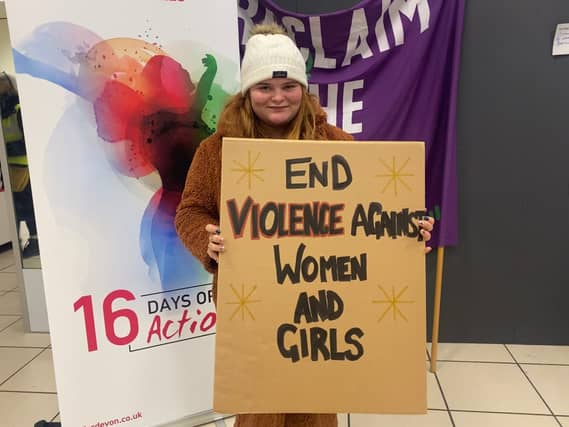

More than 1,300 sign petition as MP Steve Race and campaigners warn earlier streetlight switch-offs in Exeter could impact women’s safety and late-night workers
A petition calling on Devon County Council to rethink its decision to introduce earlier street-light switch-off times in parts of the county outside Exeter and further dimming of lights has become one of the largest submitted to the authority in recent years, as concerns grow in the city about women’s safety and late-night travel.
The petition, led by 23-year-old Exeter resident and Labour council candidate Rose Lelliott, has gathered more than 1,300 signatures. It follows a viral TikTok video about the issue that attracted more than 30,000 likes and sparked wider debate about night-time safety across Devon.
Campaigners say the petition has already surpassed the number of signatures gathered during the 2023 campaign against the Heavitree and Whipton Low Traffic Neighbourhood proposals, making it one of the most significant recent petitions submitted to the county council.
However, the council has emphasised that the policy does not change the existing street-lighting switch-off times in Exeter, where a different lighting regime already operates.
Responding to the campaign, a spokesperson for Devon County Council said:
“The safety of all highway users has been our priority throughout the policy’s development.”
They added that the dimming policy had been carefully developed following cross-party involvement and two countywide trials.
“The street lighting dimming policy was carefully developed with cross-party input and two countywide trials. Exeter’s main roads remain lit all night, and officers continue to work with stakeholders including InExeter, the Student Guild, and Devon and Cornwall Police to address safety and VAWG concerns.”
The authority stressed that streetlights in the city have been switched off overnight in some residential areas for around a decade.
“The Council has been switching streetlights off at night for around a decade, and this decision does not alter switch-off times in Exeter.
“The vast majority of roads in and around Exeter City Centre are lit all night as these have always been considered main routes. Exeter is on a separate bespoke lighting regime which recognises its unique nighttime economy and reflects feedback on earlier trials.”
The council also highlighted the environmental and financial reasoning behind the policy, stating that dimming and targeted switch-offs reduce energy use and carbon emissions while saving money.
According to the authority, the system delivers annual savings of around £270,000 and cuts approximately 200 tonnes of carbon emissions each year.
The lighting network is managed through a central control system that allows brightness levels or timings to be adjusted if concerns arise.
“The policy is kept under continuous operational review. The Central Management System allows lighting levels to be adjusted quickly in response to police advice, safety concerns, equality impacts or community feedback at any time during the trial and beyond,” the spokesperson said.
Campaigners behind the petition argue that despite the city’s separate lighting arrangements, the broader policy still raises safety concerns, particularly for women and those travelling late at night.
Rose Lelliott said the response to the campaign demonstrated how strongly people feel about the issue.
“I am incredibly frustrated that Devon County Council has ignored the concerns of women,” she said. “Despite hearing that women feel unsafe with this, they have gone ahead and ignored very real concerns.
“It feels very much that the council considers women’s safety to be worth less than £270,000. These street lighting changes effectively impose a curfew on young women, who have already faced years of anxiety walking the streets at night.”
She also criticised what she described as a lack of meaningful consultation with businesses, community groups, the city council and women’s organisations before the permanent rollout of the lighting changes.
The campaign has also received support from Exeter’s MP, Steve Race, who said lighting plays an important role in preventing crime and improving public confidence after dark.
He pointed to findings from the Angiolini Inquiry, which highlighted the importance of well-lit streets in improving safety for women.
“This Government has declared violence against women and girls a national emergency,” he said. “So I’m concerned that Devon County Council has ignored this advice and residents’ concerns and gone ahead with street-light switch-offs.
“Safety should not come at the expense of cost-saving. I want the council to consider alternatives such as motion-activated or app-controlled street lights.”
The debate follows a decision by Devon County Council’s cabinet on 17 February to make permanent changes to the county’s street-lighting programme after a 12-month trial that ran from April 2025 to March 2026.
Under the system, many residential lights connected to the council’s Central Management System are dimmed during the evening before being switched off for several hours overnight. Main roads, town centres and key routes remain fully lit throughout the night.
Around 45,000 of Devon’s 66,000 streetlights were included in the trial, enabling officers to monitor performance and make adjustments where necessary.
During the trial period the council received 12 enquiries, including five from residents in Ilfracombe. Those concerns led to adjustments to switch-off times for some areas where shift workers required earlier lighting.
Other feedback included support for the policy from communities such as Appledore and Dunsford, while objections were received from locations including Barnstaple, Exeter, Okehampton and Tiverton.
Despite the mixed responses, council leaders concluded that the policy delivered environmental benefits and cost savings while maintaining road safety.
The petition will now be considered under Devon County Council’s formal petitions scheme, which allows councillors to review submissions and decide whether further debate or action is required.