
Exeter's traditional phone boxes could be replaced by giant digital screens
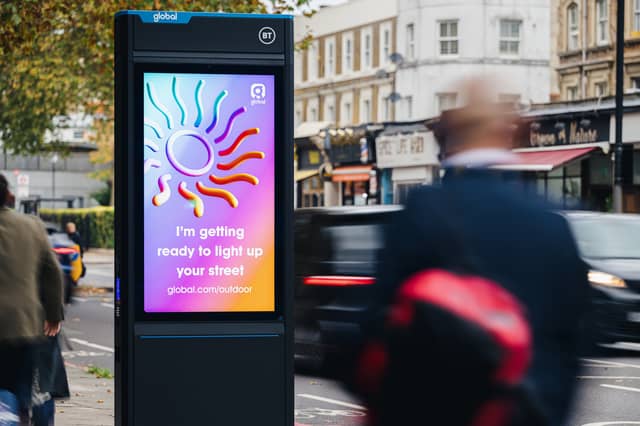

Exeter City Council to review new BT Street Hub planning applications for South Street, Sidwell Street, and Heavitree Road as traditional payphone usage drops by 90 per cent nationwide across the UK under Ofcom removal guidelines.
Traditional phone boxes across Exeter could soon be replaced by sleek, high-tech digital screens under new plans submitted to city planners.
Telecommunications giant BT has submitted a wave of planning applications to upgrade its public calling infrastructure across the city centre.
If approved, the proposals will see several existing payphone kiosks dismantled to make way for modern "Street Hub" units, completely altering the look of several busy pedestrian routes.
Where are the changes planned?
The tech rollout targets three key locations in Exeter, with applications newly validated by Exeter City Council this May:
-
South Street: Plans seek the removal of two existing payphone kiosks on the pavement outside 84 South Street, to be replaced by a single proposed Street Hub unit (Ref: 26/0643/FUL).
-
Sidwell Street: A proposal outlines the installation of a Street Hub on the north side pavement outside James Owen Court, which would trigger the removal of older BT payphone booths on the south side pavement of nearby Old Tiverton Road (Ref: 26/0645/FUL).
-
Heavitree Road: The latest application seeks to install a Street Hub on the north side pavement outside Clarendon House on Western Way, allowing for the removal of the associated older BT payphones located on the south side of Heavitree Road (Ref: 26/0641/FUL).
Why are the hubs being introduced?
The sleek, modern units are designed to bring public infrastructure into the digital age. The units are smaller than the traditional kiosks they replace, helping to clear clutter and free up physical space on busy city pavements.
This infrastructure shift comes amid a major national decline in traditional telephony. It is understood that 98 per cent of the adult UK population now uses a mobile phone, and calls from public phone boxes have plummeted by around 90 per cent over the past decade.
Operating the legacy kiosks costs millions of pounds annually, and transitioning to modern hubs allows for greater investment into full-fibre broadband and mobile networks. Reflecting this trend, the number of active public payphones across the UK has fallen rapidly from roughly 20,000 down to 9,000 in just the last two years.
Crucially for the local area, the new infrastructure is built for future tech upgrades. The units feature the capability to house "small cells", essentially mini mobile masts, which can be utilised to directly boost 4G and 5G mobile coverage for anyone passing by in the immediate vicinity.
The large digital display screens on the sides of the hubs will also double as street-level advertising platforms, which can be utilised by local enterprises and businesses.
What services will they provide?
The hubs will maintain the traditional legal requirement for public communication options while adding a suite of free, modern digital tools.
A BT spokesperson told Exeter Today: "Street Hubs are digital units which support our Universal Service Obligation to provide a public call service in the UK.
"As well as offering connectivity to make calls and utilise free public Wi-Fi, Street Hubs also offer USBs for rapid device charging, touch-screen tablets displaying real-time public information and a dedicated 999 calling button.”
What happens next?
All proposed removals must strictly adhere to revised guidance set out by the industry regulator, Ofcom. Under these guidelines, local planners review a range of local factors, including the specific kiosk location, recorded usage, mobile signal strength, and alternative nearby payphones.
Exeter City Council has the opportunity to review the proposals and provide evidence or representations before a final decision is made.
For traditional kiosks that are ultimately decommissioned, the "Adopt a Kiosk" scheme remains open to local authorities, parish councils, and registered charities.
Since 2008, around 7,400 redundant phone boxes across the UK have been taken over for just £1, allowing communities to repurpose the empty structures into local assets like defibrillator stations or mini-libraries.
All three planning applications are currently pending consideration and await a decision from Exeter City Council planners.