
Bin lorry fire caused by lithium battery in recycling bin
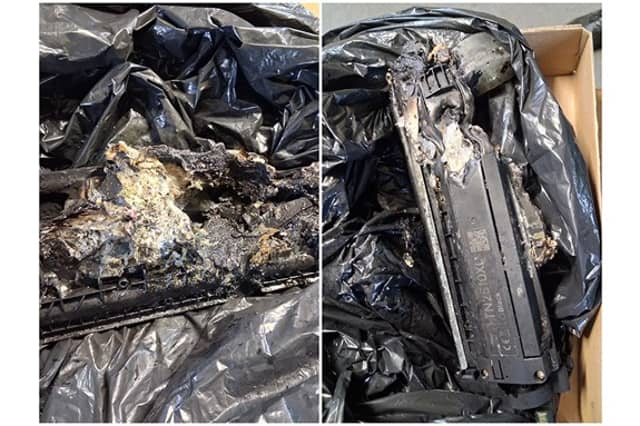

Exeter City Council is urging residents to take their lithium batteries to recycling points after a bin lorry fire was caused by a battery in a recycling bin, highlighting the dangers of contamination in household waste.
Rush-hour traffic on Pinhoe Road ground to a halt on Wednesday morning after a bin lorry caught fire mid-round, with the blaze traced back to a single battery that should never have been in the recycling in the first place.
A crew working the early shift noticed smoke drifting from the rear of their vehicle and acted fast. Investigators believe the cause was a lithium battery buried inside a discarded printer cartridge, which ignited once it was crushed inside the lorry's compactor.
Rather than wait for help, the crew triggered the vehicle's compaction system to starve the fire of oxygen, pulled over in a safe spot and dialled 999. Fire crews arrived within minutes and had the team empty the entire load onto the road before dousing the flames.
The clean-up and closure disrupted one of the city's busiest routes during the morning commute, with Pinhoe Road shut for several hours while the fire was tackled and debris cleared away.
Councillor Ruth Williams, Exeter City Council's Deputy Leader and Lead Councillor for Support Services and City Management, said the crew's quick thinking prevented a much worse outcome, though she used the incident to renew calls for residents to think twice about what goes in their bins.
"Thanks to them, nobody was injured and the vehicle suffered only minor damage," she said. "They did what they were trained to do, but it could have been prevented by someone thinking more carefully about what they threw in the bin."
Not a one-off
This is far from the first time a stray battery has caused chaos for Exeter's waste collection service. Last year, a vape thrown into a recycling bin sparked a fire that left a council vehicle with roughly £25,000 worth of damage.
Cllr Williams argued that the real risk isn't financial, it's to people's safety. Hidden batteries, she explained, often go undetected until they're already being crushed inside a lorry packed with flammable waste.
"The danger is particularly acute when items containing batteries are hidden inside recycling loads," she said. "By the time a battery is discovered, it is often already moving through machinery, having been compacted inside a vehicle full of flammable material. Batteries, vapes and small electrical items must never be placed in household mixed recycling bins."
She said the danger doesn't end once a battery is out of sight. "A battery thrown into a bin does not disappear when the lid closes," she said. "It enters a system where it can be crushed, punctured and damaged, potentially triggering a fire within seconds."
Who ends up paying
Beyond the immediate danger, Cllr Williams pointed to the knock-on costs for the wider public every time a fire like this breaks out, from damaged vehicles to emergency crews being pulled away from other jobs.
"Expensive equipment can be damaged or destroyed, operations disrupted and recyclable materials lost," she said. "Most importantly, emergency service resources are diverted. When a fire engine is dealing with a bin lorry fire, it cannot be somewhere else. When a vehicle needs repairs, the bill is paid from public funds."
She acknowledged that collection crews are effectively working blind when it comes to spotting hazards buried inside bins. "The crews cannot see contamination buried in the bin, so it is vital that our residents understand what can and can't go in their bins," she said, before thanking the "majority of our residents who do the right thing and don't dispose of batteries in recycling or household waste but take them to battery recycling points."
Where batteries should actually go
Phones, headphones, power tools, toys, e-bikes, printers and vapes all rely on lithium batteries, none of which belong in a household recycling or waste bin, no matter how small the item.
Instead, the council is pointing residents toward proper disposal routes. Shops that sell electrical goods, including vapes, are legally required to take them back for recycling, and standalone battery recycling points are also widely available across the city.