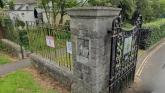
King George V playing fields in Exeter (Image courtesy: Google Street View) Cleared for use by LDRS partners
Search


29 Mar 2026

Please allow ads as they help fund our trusted local news content.
Kindly add us to your ad blocker whitelist.
If you want further access to Ireland's best local journalism, consider contributing and/or subscribing to our free daily Newsletter .
Support our mission and join our community now.
To continue reading this article, you can subscribe for as little as €0.50 per week which will also give you access to all of our premium content and archived articles!
Alternatively, you can pay €0.50 per article, capped at €1 per day.
Thank you for supporting Ireland's best local journalism!

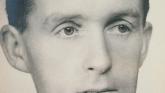
(Image courtesy: Wikimedia)

William Arnold Ridley was born on January 6, 1896, at Walcot near Bath, Somerset. His mother was Rosa Caroline and father William Robert Ridley, a gymnastics instructor at a local school. In mirroring his father William would later get involved with education and on two occasions worked as a teacher in Torquay.
Recalled rarely today, he was a playwright and actor who eventually played Godfrey, being the oldest member in TV’s successful show Dad’s Army.
William was educated at Clarendon School before moving to Bath Secondary School and graduating to Bristol University.
There he was introduced to its theatre and eventually played Hamlet in a production at the University.
Later Ridley moved on to teaching practice at Bristol Elementary school and soon was made a student teacher before becoming a volunteer with the British Army as the First World War was announced.
Before volunteering Ridley had made his debut on stage by appearing in “Prunella” at the Royal Theatre Bristol.
But now in 1914 having been rejected by the Army he chose to enlist as a private with the Somerset Light Infantry.
He saw active service and soon was injured in close combat. At the Battle of the Somme he was again wounded and virtually lost the use of an arm, suffered a bayonet wound to the groin and had his legs riddled with shrapnel. He sustained a butt rifle blow to the head.
This all caused his medical discharge from the Army in May, 1917, holding the rank of lance corporal.
After the war Ridley “schoolmastered” in Torquay while actually recovering from his multiple injuries.
Now he walked with a limp and his arm was unusable and yet somehow he managed to get a “games master” position for a year.
With the summer term over in 1918 he moved on to Birmingham although not before a woman dressed in a fox-fir in Torquay handed him a “white feather”.
He made no reply and as he was in civvies, she could not know he had been honourably discharged from the Army and even had a Silver War Badge.
In Birmingham he soon joined the repertory theatre, where he remained two years acting in dozens of supporting roles.
He returned west to Plymouth where he had to convalesce from the injuries. While relaxing he found his skill as a writer by creating his first play, The Ghost Train, a tale of passengers stranded on a haunted station in Cornwall.
The play, an instant hit in London, ran in the West End from 1927 for a staggering 665 consecutive shows.
It was the first of 30 odd plays Ridley penned between 1924 and1932 including The Wrecker and Beggar My Neighbour in 1924, although The Ghost Train was his best work.
His writing brought German-British co-operation when his play became a film starring Jack Hubert before later in 1941 Ghost Train was a repeat film featuring new star Arthur Askey.
Ridley rejoined the Army in 1939 and was commissioned as a second lieutenant by October 7.
He served with the British Expeditionary Force in France and later even joined journalists on the front line.
On return to Britain he was on the destroyer Vimiera, the last ship to leave the Battle of Boulogne.
Having arrived safely home he was judged medically unfit and was permanently discharged from all Armed Forces.
Never one to give up, Ridley joined the Home Guard and it was that experience which he acted out in Dad’s Army.
He returned to be on radio, joining The Archers before finally appearing in TV’s Crossroads and many other shows before Queen Elizabeth awarded him an OBE in 1968.
It was in that year he played the gentle Private Godfrey in TV’s Dads Army, which ran until 1977.
Meanwhile, William had married three times and had produced one son, Nicholas, by his third wife Althea Parker.
Being a superb playwright he had adapted many of his successful plays for the big screen and eventually wrote three stories especially for cinema audiences.
William Arthur Ridley died at age 88 in a London hospital after a fatal fall at his home, Denville Hall, Northwood, in Hillingdon on March 12, 1984.
Having described his wartime experiences on Desert Island Discs in 1973 Arnold appeared on This Is Your Life in 1976 having been accosted by Eamonn Andrews on Marylebone Station. His most successful play had been based on Mangotsfield Railway Station in Bristol, where later it was first performed.

Subscribe or register today to discover more from DonegalLive.ie
Buy the e-paper of the Donegal Democrat, Donegal People's Press, Donegal Post and Inish Times here for instant access to Donegal's premier news titles.
Keep up with the latest news from Donegal with our daily newsletter featuring the most important stories of the day delivered to your inbox every evening at 5pm.