Police in Exeter. Credit: Devon & Cornwall Police
Search


26 Mar 2026

Please allow ads as they help fund our trusted local news content.
Kindly add us to your ad blocker whitelist.
If you want further access to Ireland's best local journalism, consider contributing and/or subscribing to our free daily Newsletter .
Support our mission and join our community now.
To continue reading this article, you can subscribe for as little as €0.50 per week which will also give you access to all of our premium content and archived articles!
Alternatively, you can pay €0.50 per article, capped at €1 per day.
Thank you for supporting Ireland's best local journalism!

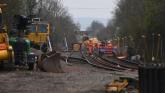
One of the flood damaged sites on the Tarka Line, between Crediton and Exeter, one of nine sites washed out as a result of flooding from the River Creedy. Credit: NDLRPG
Rail passengers in the South West are facing nearly five times as much disruption from flooding as they did a decade ago, new figures suggest.
Analysis of Network Rail data shows that flood-related delays across the region have surged by 386 per cent compared with the mid-2010s.
The figures come as users of the Tarka Line, which connects Barnstaple and Exeter, continue to count the cost of increasingly volatile weather.
Earlier this year, the vital commuter link was forced to close for 24 consecutive days following extreme rainfall from Storm Chandra. The closure left thousands of North Devon residents reliant on replacement bus services as engineers worked to repair trackbeds washed away by the River Creedy.
The figures were uncovered by Round Our Way, a non-profit group that highlights how weather changes are affecting local communities.
The data shows a “rising tide” of cancellations across the region. Round Our Way warned that the South West's rail network is “buckling” under the pressure of floods, landslips, and extreme rainfall.
On average, travelers in the region now face 2,862 minutes of flood delays every year. In the mid-2010s, that yearly average was nearly five times lower, at just 589 minutes.
“The rail network appears to be under persistent weather stress,” said Sofie Jenkinson, co-director of Round Our Way.
The group has suggested that the UK is not ready for climate change.
“We are not prepared for the impact that climate change is already having on ordinary Brits’ way of life.”
In a flood disruption hot spot map, generated by the research organisation, stations at Barnstaple, Eggesford, Crediton, Okehampton and Exeter St David’s were all flagged up.
For many in the South West, the statistics simply confirm what they see on the platform display boards.
The 24-day closure of the Tarka Line in early 2026 was one of the longest continuous weather-related disruptions in the line's history. Network Rail reported that floodwater removed the stone ballast supporting the tracks at nine different sites between Exeter and Crediton.
The Met Office notes that the last decade has been 10 per cent wetter than the period between 1961 and 1990.
To maintain transparency, the report's authors outlined how the figures were reached:
According to the analysis, several locations in the South West have recorded 25 or more flood incidents since 2014, including:
Ms Jenkinson said the “significant rise” in delays raised concerns about the safety of the UK's “creaking rail infrastructure.”
She added: “We are all sadly getting very familiar with the impact climate change-driven extreme weather is having on the country. This is worrying but it is also fixable.
“Politicians need to show leadership to better prepare us for weather extremes and challenge the companies profiting from pollution which creates these impacts in the first place.”

Subscribe or register today to discover more from DonegalLive.ie
Buy the e-paper of the Donegal Democrat, Donegal People's Press, Donegal Post and Inish Times here for instant access to Donegal's premier news titles.
Keep up with the latest news from Donegal with our daily newsletter featuring the most important stories of the day delivered to your inbox every evening at 5pm.