Sorry day at Torquay United. Pic from PPAUK
Search


01 Mar 2026

Please allow ads as they help fund our trusted local news content.
Kindly add us to your ad blocker whitelist.
If you want further access to Ireland's best local journalism, consider contributing and/or subscribing to our free daily Newsletter .
Support our mission and join our community now.
To continue reading this article, you can subscribe for as little as €0.50 per week which will also give you access to all of our premium content and archived articles!
Alternatively, you can pay €0.50 per article, capped at €1 per day.
Thank you for supporting Ireland's best local journalism!

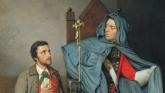
Charlotte Schreiber’s painting The Croppy Boy – one of her most celebrated works (Image courtesy: Charlotte Mount Brock Morrell Schreiber, Public domain, via Wikimedia Commons)

Part 1 of 2
Charlotte Morrell was born at Withem near Colchester on May 21, 1834, the daughter of Mary Mount-Brock and the Reverend Robert Price Morrell.
Her father was a clergyman in the Church of England and it was through his encouragement that she attended teaching classes by joining Mr Carey’s School of Art in London from 1855. Initially taught by John R Herbert RA, he specialised in historical paintings and portraits, then later moved to Mr Scarf, who specialised in anatomy and the human form, her particular love. Some of her illustrations would form a large part of her overall portfolio.
On completing her training at the School of Art, many of her anatomical illustrations were included in Edmund Spencer’s book, The Legend of the Knight of the Red Cross, published in 1871. They were also included in The Rhyme of the Duchess, written by her friend Elizabeth Barrett Browning. Presumably, they met when Elizabeth was living in London, though later she came to Torquay to convalesce after contracting yellow fever in the capital.
Miss Barrett, having brought many of her immediate family, leased a large house on Braddons Hill Road in Torquay although within weeks she moved to Regina House at 3, Victoria Parade, which had its own internal bathing room overlooking the inner harbour of Torquay. From here Elizabeth could witness the daily sailings to and from Plymouth and London and with her many servants she easily coped with her family members. Most of them stayed throughout her long convalescence from 1838 to 1841, when she returned home to London.
A century later Torbay Civic Society, through the chairman Ena Hocking, unveiled a blue plaque in 1988 on what today is Regina Hotel, honouring the fact that Miss Browning had lived here for three years. Our plaque may still be viewed at the hotel front wall overlooking the harbour that Elizabeth enjoyed so much.
Later, when Charlotte left Canada in 1898, she mirrored Elizabeth by choosing Torbay and Paignton for her retirement. In the 1850s Charlotte exhibited her work at the Royal Academy of Arts London and by 1874 was seen as the new talent of Britain’s art world. In 1875 she met her second cousin, Weymouth George Schreiber (of Toronto Canada) a widower with three children, and within a year they had married and all returned to his beloved Canada. They settled in Deer Park, Toronto, and remained there happily for five years.
Charlotte Mount Brock Morrell Schreiber’s talent was fully recognised in Canada as in Britain. Back in London they elected her as an honorary member of the British RCA and officially recorded her as “a very accomplished artist”. Once in Canada she quickly became part of the local Province community while again being recognised as an outstanding artist.
As early as 1876 she was an elected member of the Ontario Society of Arts, Canada, and in the annual report of the following year she was said to be “honoured to be the first female on the board of the Ontario Society”. Only a year later in 1877 she was employed as art teacher and in fact stayed for three years, a huge honour for someone not born in Canada.
She had, however, also helped Canada’s Royal Academy of Arts become established. But then for some reason never publicised, voting members of the academy decided to ban all women from all meetings, quite astonishing bearing in mind that one of their own was Charlotte.
Back in Britain, we saw it as very odd that although an active member of the society and an employee, Mrs Schreiber was now subject to the “ban” according to some voting members. With the rule having passed it was not long before Canada knew that Charlotte had lost none of her “fire and enthusiasm as a young girl in Britain”, which took many by surprise when in 1888 she announced she would “retire rather than resign” over “that vote”.
One of her most popular pictures as a female painter became the portrait, The Croppy Boy, which was seemingly liked. It was even reported as “highly regarded throughout Canada” and so now literally dozens of her portraits, pictures of animals, paintings of scenes of everyday life and her historical depictions were exhibited. It counted for little on those members voting at the RAA, as “that ban” had been permanently adopted. (Final part of this article next week).
This world famous artist now spent her retirement at Cleveland Road Paignton where she live for twenty two years. Virtually unknown in Torbay her pictures, portraits and illustrations are admired around the world

Subscribe or register today to discover more from DonegalLive.ie
Buy the e-paper of the Donegal Democrat, Donegal People's Press, Donegal Post and Inish Times here for instant access to Donegal's premier news titles.
Keep up with the latest news from Donegal with our daily newsletter featuring the most important stories of the day delivered to your inbox every evening at 5pm.