
Ageing with fewer friends may protect against illness
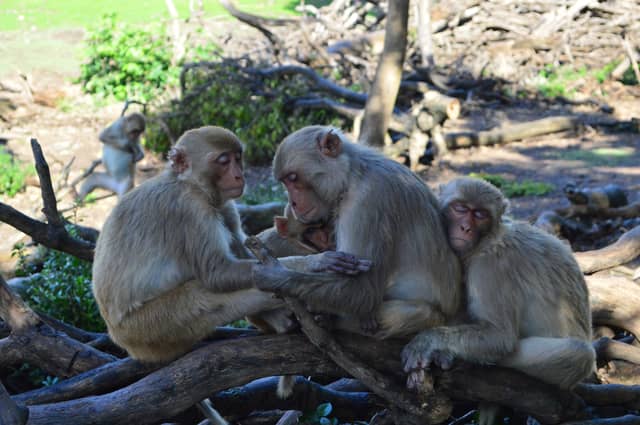

The study was led by universities Exeter and Edinburgh
The universities of Exeter and Edinburgh have found that keeping fewer friends protects ageing monkeys from diseases.
Many animals, humans included, are known to experience social ageing or a reduction in their number of social connections as they get older.
The reason behind this behaviour is still a mystery, but new research shows that being less social helps protect older monkeys from illness.
The study used long-term date data on rhesus macaques on Cayo Santiago, known as Monkey Island.
It found that older macaques are likely to suffer less from infectious disease, mostly because of their smaller social networks.
Professor Lauren Brent from the University of Exeter guest-edited the study, which was published as part of a special issue of Philosophical Transactions of the Royal Society B.
“Social ties bring huge benefits to a vast range of species, but sociality also comes with costs, including infectious disease risk,” said Dr Erin Siracusa from Exeter’s Centre for Research in Animal Behaviour.
“This cost-benefit ratio can change across individuals’ lifespans, which may drive changes in social behaviour.
“Older individuals may be more susceptible to diseases, but once we accounted for that in our data, we found that older macaques suffered lower infection costs than their younger counterparts.
“Our findings suggest a powerful reason why many animals, including humans, might reduce their social connections as they age.”
The health benefits older macaques get from social ageing depend on the type of disease, with the biggest advantages seen for highly contagious diseases that hit older macaques hardest.
Dr Matthew Silk, from the University of Edinburgh, said: “Our results point to illness potentially helping to explain why 'social ageing’ evolves—something we are keen to test in future research.”
The research was partly funded by the National Institutes of Health and Dr Silk’s Royal Society University Research Fellowship.
The study is entitled: “Social ageing can protect against infectious disease in a group-living primate.”
The special issue of the journal is called: “Understanding age and society using natural populations.”