
A life of love, loss, and Ukrainian heritage in new memoir

This article contains affiliate links. We may earn a small commission on items purchased through this article, but that does not affect our editorial judgement.
David Roberts speaks about his debut memoir and his inspiration behind writing it
David Roberts, a retired teacher from Heavitree, spoke with Exeter Today about his recently published memoir, A Life in Tales, detailing the events of a life well-lived.
David’s collection of short stories is simultaneously a celebration of his and his family’s lives and a love letter to his Exeter-born wife’s Ukrainian heritage.
“I’ve always considered myself a writer,” says David.
“When I first met my wife, I probably dreamed of one day being a poet, but then more practical considerations took over one’s life.”
David explained that his inspiration to write the memoir came from discovering “The Short Story” by Seán O’Faoláin, an Irish writer. It describes the essence of a successful short story.
He said: “Both my father and father-in-law have had fascinating lives. They were both raised in poverty, having been exiled in one way or another to another country whose language they didn’t know, and sadly, I never wrote the story of either of them.”
David shared that as a child, his Welsh father was sent to a charity school in Suffolk without a word of English.
Meanwhile, after WWII, Nadia’s father sought asylum in the UK as a refugee and assumed Polish nationality to avoid being sent back to the Soviet Union, where many Ukrainians faced severe punishment.
David added: “Now that I’m a grandfather with four grandchildren, there’s the notion that I want to leave something for them as well.”
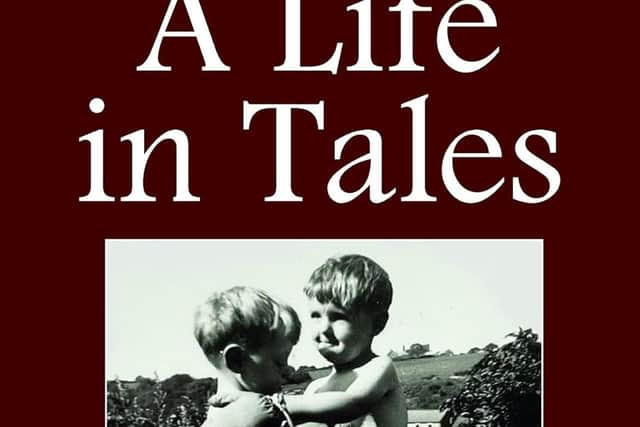
The earliest stories briefly describe David’s childhood growing up in Singapore, his experience at a boarding school, which he loathed, and how he met his wife, Nadia, at teaching training college.
The stories speak to a complex collective experience as well as a personal one, spanning topics such as politics, communism, religion, family, the generosity of Ukrainian hospitality, and Voluntary Service Overseas (VSO) in Africa.
As many of the stories take place in rural Ukraine, David also expressed his and Nadia’s devastation about the ongoing Russian invasion of her father’s homeland.
He said: “It’s been devastating. I’m once removed from it, but for Nadia, it’s in her blood. It’s tragic. Also, the part of Ukraine that Nadia’s family is from is Sumy, which is almost on the front line. When the invasion first happened, the Russian troops marched straight through Sumy, straight past our friend Maria’s front door, and on towards Kyiv.”
David highlighted the significant influence their Ukrainian heritage has had on their daughters, who were born in Exeter.
This heritage has played a crucial role in shaping their understanding of and relationship with people from diverse cultures and backgrounds.
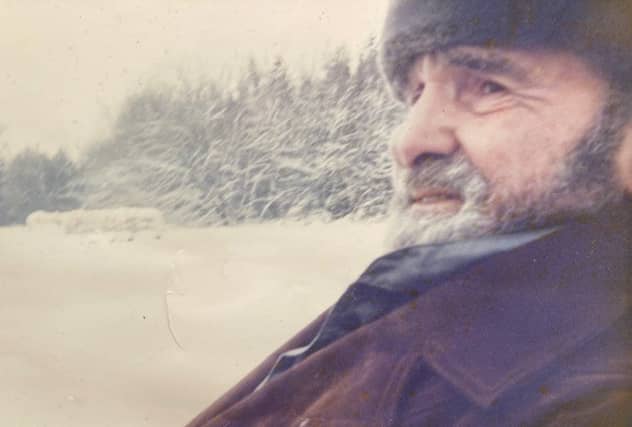
David now has plans in the works to write another book about the rich and varied life of his late Ukrainian father-in-law.
This venture, however, is partly dependent on translating his father-in-law’s own handwritten memoir, written in colloquial, vernacular Ukrainian and without any punctuation.
David explained that despite the personal element to his narratives, he hopes that everyone will be able to find something to relate to within the stories.
He said: “Because I’m writing about love and loss, I think that people can identify with that. I’ve included an epigram at the front of the book from a novel by Tommy Orange that says, ‘Sometimes not having a story is the story.’
“I’m not a pop star; I’ve never been on stage, I’ve never done anything famous, and I’ve never won any sports competitions. So in a sense, there isn’t really a story. But there is. We all have a story. "And to be honest, by the time you reach 74, you have a duty to leave something for your children and grandchildren that might help them, in some small way, understand where they come from."