
World Cup 2026: The seven Devon-born footballers who played for England
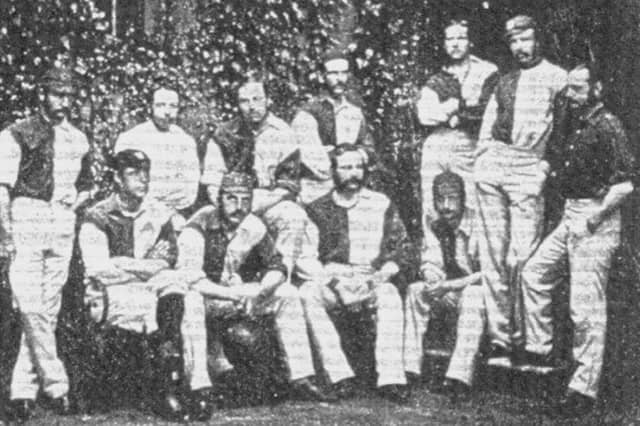

From Victorian pioneers to Euro heroes, Devon's footballing legacy runs deep. As the World Cup approaches, we trace the history of the county's homegrown England internationals.
When England steps onto the world stage this summer, the eyes of the footballing world will be watching. But while the modern squad is pulled from the glitz of the Premier League, the roots of the national team stretch into the quiet coastal towns and rolling hills of Devon.
Devon has never been a traditional hotbed of top-tier football, yet it has consistently punched above its weight, producing pioneers, record-breakers, and history-makers for the national team.
From the "prince of dribblers" in the 1870s to Euro 2024 hero Ollie Watkins, these are the seven Devon-born men who earned the right to wear the Three Lions.
1. Walpole Vidal (Abbotsham)
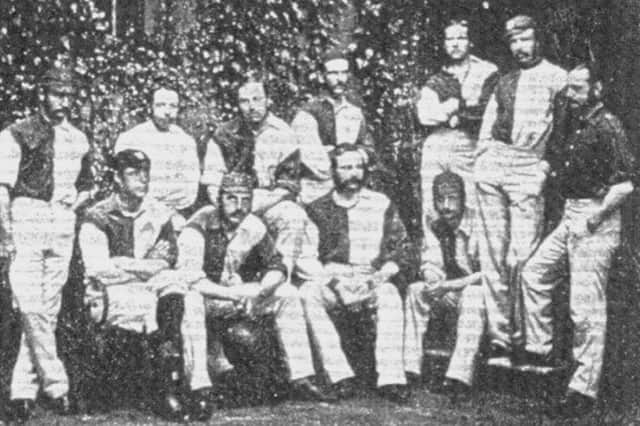
- England Caps: 1
- (1 unofficial) (1870–1871)
- The Pioneer: Born at Cornborough House near Bideford, Robert Walpole Sealy Vidal was a true pioneer of the beautiful game. Known as the "prince of dribblers," he played in the first-ever international match in March 1870 against Scotland at the Kennington Oval. Under the rules of the time, the team that scored kicked off again. It was said Vidal once used this to score a hat-trick without the opposition ever touching the ball.
2. Dick Pym (Topsham)
- England Caps: 3
Richard Henry ("Pincher") Pym was born into a fishing family and played for a local club in his hometown of Topsham. He started initially as a centre-forward before moving to Exeter City in 1911. He played his first game in the reserves in December, and on March 23, 1912, he debuted in the first team, replacing the regular goalkeeper. He subsequently appeared in 186 consecutive matches in the Southern League for Exeter. During the First World War, Pym joined the Devonshire Regiment in 1916, where he served as a Physical Training Instructor.
When Exeter City joined the Football League in 1920, Pym was sold to Bolton Wanderers at the end of the 1920/21 season for the enormous sum of £5,000 to enable the club to purchase its home ground, St James Park. He is best known for being the Bolton goalkeeper at the first-ever FA Cup final to be played at Wembley Stadium in 1923, and he won further FA Cup winners' medals with Bolton in 1926 and 1929.
Pym debuted for England on 28 February 1925 in a 2–1 win over Wales. The following month he played in a 2–0 victory over Scotland. On 1 March 1926, again playing Wales, he earned his third and final cap. Pym left Bolton in 1930 after 336 matches for the club, going on to play for another year with non-league Yeovil & Petters United. After this he returned to the fishing industry.
3. George Ashmore (Plymouth)
- England Caps: 1 (1926)
George Samuel Austin Ashmore was born in Plymouth and represented South Devon & District Schools. After playing for Nineveh Wesley in Handsworth, he joined West Bromwich Albion in November 1919 and soon replaced Hubert Pearson as the first-choice goalkeeper. He made his league debut in October 1920 against Blackburn Rovers at Ewood Park, a match that Albion lost 5–1.
His solitary appearance for England came on May 24, 1926, in a friendly against Belgium, which finished 5–3 to England with Frank Osborne scoring a hat-trick as England came from 3–2 down. On Easter Monday (March 24, 1928), Albion played Southampton at The Dell. Ashmore was injured, replaced in goal by a defender, and switched to the wing. In the second half, with the scores level at 2–2, Ashmore was back helping out in defence. Forgetting that he was now an outfield player, Ashmore caught the ball in the penalty area, allowing Stan Cribb to score from the penalty spot to give the "Saints" the victory.
4. Cliff Bastin (Exeter)
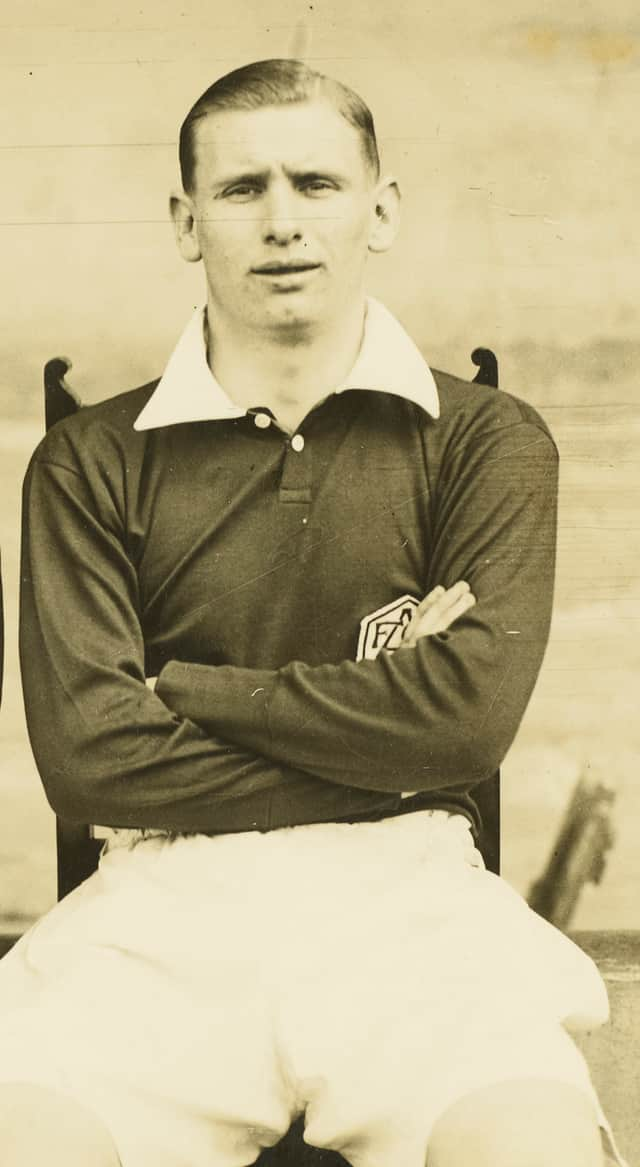
- England Caps: 21 | Goals: 12
The Arsenal Legend: Clifford Sydney Bastin was born in Exeter and started his career at Exeter City, making his début for the first team in 1928 at the age of 16. Despite only playing 17 games and scoring 6 goals in his time at Exeter, he was spotted by Arsenal manager Herbert Chapman in a match against Watford.
The winger also played for the England national team and went on to become Arsenal's third-highest goalscorer of all time.
Bastin made his senior England debut in November 1931 at Anfield, featuring in a 3–1 victory over Wales. His opening international goal arrived during his second cap away against Italy, followed a week later by a brace against Switzerland in Bern.
His international career was defined by some of football's most historic fixtures. He starred in the legendary "Battle of Highbury" in 1934, helping England secure a bruising 3–2 win over World Cup holders Italy on his Arsenal home turf. In May 1938, Bastin featured in a notorious clash against Germany in Berlin, where the England squad was ordered to give the Nazi salute before kick-off. England won 6–3, with Bastin scoring his tenth international goal.
Though his final cap tally was limited by intense competition from Manchester City's Eric Brook, Bastin bowed out at the top. On 26 May 1938, he made his final appearance for England against France in Paris, signing off with a penalty.
His immense talent was recognised globally. Hugo Meisl, the mastermind coach of the famed Austrian "Wunderteam," rated the Devonian incredibly highly. Ahead of the 1934 World Cup, Meisl famously remarked that Austria would only win the tournament if they had a player of Cliff Bastin's calibre in their ranks.
Following his retirement, Bastin returned to his Devon roots to run a pub in Exeter. In 1950, he published his autobiography, Cliff Bastin Remembers, ghost-written by renowned sports journalist Brian Glanville.
Bastin passed away in 1991 at the age of 79. His impact on the local game lives on; the Big Bank stand at Exeter City's St James Park was formally named in his honour, and in 2009, he was inducted into the English Football Hall of Fame.
5. Ralph Birkett (Torquay)
- England Caps: 1 (1935)
Ralph James Evans Birkett was born in Torquay and was discovered by Torquay United while playing for Dartmouth United, moving to Plainmoor as an amateur in 1930. He made his league debut on the right wing on March 8, 1930, starring in a 7–0 win against Bournemouth & Boscombe Athletic, which was Torquay's first win of the new year.
He signed a professional contract with the Third Division South club the same month. His Middlesbrough debut came on March 16, 1935, against Preston North End. Later that year, on October 19, Birkett made his only international appearance for England against Northern Ireland, which England won 3–1. He was selected to play a second game but suffered an injury and withdrew.
6. Trevor Francis (Plymouth)
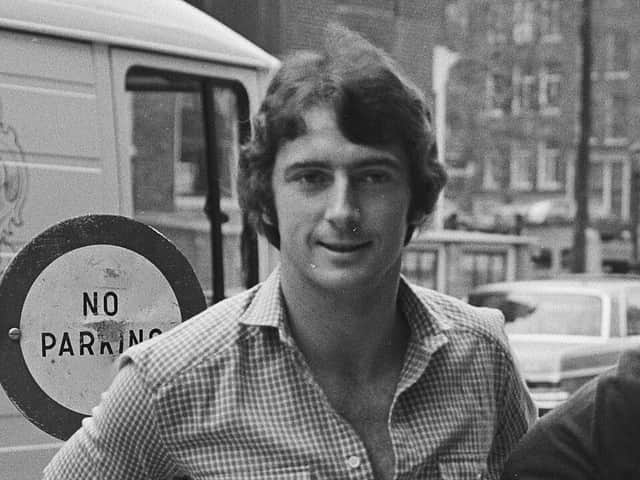
- England Caps: 52 (1976–1986) | Goals: 12
The Million-Pound Man: Trevor John Francis was born on April 19, 1954, in Plymouth. He played as a forward for a number of clubs in England, the United States, Italy, Scotland, and Australia. In 1979, he became Britain's first £1 million player following his transfer from Birmingham City to Nottingham Forest.
He scored the winning goal for Forest in the 1979 European Cup final against Malmö and won the European Cup again with the club the following year. At international level, he scored 12 goals for England and played at the 1982 FIFA World Cup. Between 1988 and 2003, Francis went on to manage Queens Park Rangers, Sheffield Wednesday, Birmingham City, and Crystal Palace.
7. Ollie Watkins (Torquay)
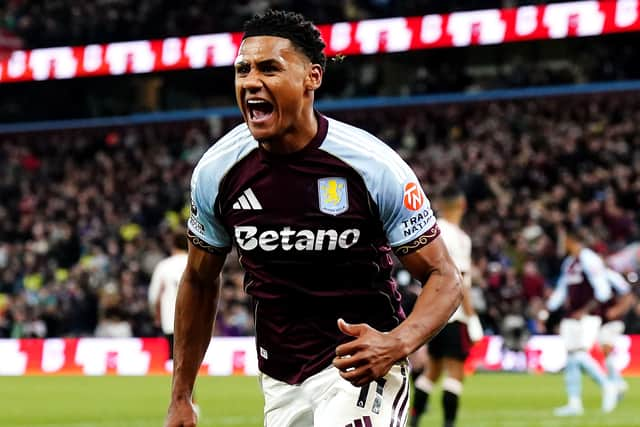
- England Caps: 15+
Oliver George Arthur Watkins was born on December 30, 1995, at Torbay Hospital in Torquay, Devon. Watkins grew up in Newton Abbot and attended South Dartmoor Community College in Ashburton. Today, he is an English professional footballer who plays as a forward for Premier League club Aston Villa and the England national team.