
Exeter welcomes Devon shake-up as county leader warns of 'betrayal'

Exeter City Council has welcomed government plans to create four new unitary authorities in Devon, while the county council's leader has warned the changes will drive up council tax and put children's services at risk.
Exeter City Council has welcomed the government's decision to approve a major reorganisation of local government in Devon, while the Leader of Devon County Council has branded the plan a "Labour-led gerrymandering" that will drive up council tax and threaten services.
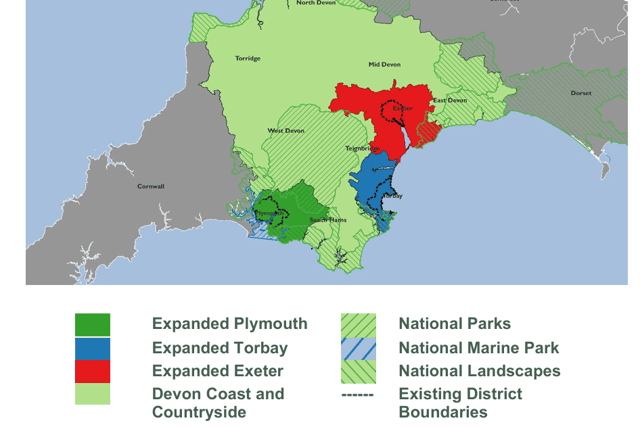
The Secretary of State for Housing, Communities and Local Government has approved the joint proposal by Exeter and Plymouth city councils to create four new unitary authorities for the county. The new councils will be an expanded Exeter, taking in 49 surrounding parishes from Teignbridge, East Devon and Mid Devon; an expanded Plymouth, taking in 13 parishes from South Hams; an expanded Torbay, taking in 21 nearby parishes; and a new authority called Devon Coast and Countryside, covering the county's remaining rural and coastal communities.
Elections for the new shadow authorities are due to take place in May 2027, with the authorities becoming fully operational on 1 April 2028. Exeter City Council said there would be no immediate change to services, with bin collections, council tax, housing services, benefits, planning and customer contact arrangements continuing as normal while the transition is prepared.
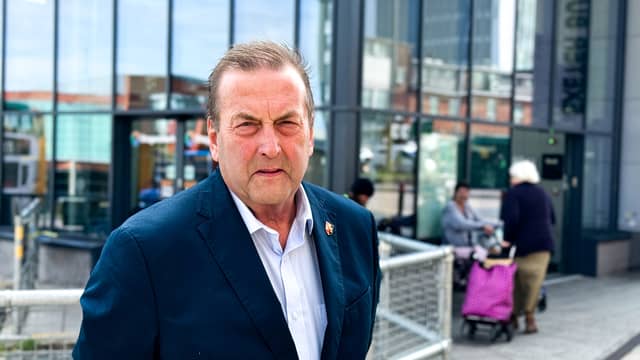
Exeter City Council Leader Cllr Phil Bialyk welcomed the decision, saying: "I very much welcome this decision. Local government reorganisation is a unique opportunity to build a brighter future with stronger services and local accountability." He added: "It simplifies things for residents and communities by just having one tier of local government running services. Exeter and Plymouth's joint submission recognised the importance of Devon's growth areas while ensuring all four new councils have the scale to deliver high-quality services. I am delighted the Government has recognised this."
He continued: "Residents and communities will receive more information in the coming weeks and months on what this decision means for them, but for now there is no change, and it remains business as usual."
Plymouth City Council Leader Cllr Tudor Evans also backed the decision, saying: "This is a positive decision for Devon, and we are pleased the Government has recognised the strength of the joint proposal developed with Exeter City Council, and supported by two of our local MPs." He added: "Creating four unitaries will bring clearer democratic accountability, with decisions made closer to the communities they affect, and services shaped around the distinctive needs and opportunities of each area."
Exeter City Council's Chief Executive Bindu Arjoon said: "I welcome this announcement and we now have a lot of work to do to ensure a smooth transition to the new unitary authorities in Devon. That work is already well underway in Exeter and will now move forward at pace. We will work with other existing councils in Devon to ensure all residents and communities are fully aware of the change and feel part of the process." She added: "In the meantime, we will not be distracted from our responsibility to provide the best possible services for our residents."
However, the plan has been strongly criticised by Devon County Council Leader Cllr Julian Brazil, who said the decision to split the county into four new unitary authorities has "shafted" Devon's rural communities and represents a "deceitful betrayal" of local people. He said the proposed expansion of Exeter, Plymouth and Torbay ignores clear evidence on financial sustainability, service resilience and the protection of vulnerable children and adults.
Cllr Brazil said: "This is a government stitch-up, pure and simple. The government has looked at the proposals and accepted the Plymouth and Exeter versions, who just happen to be Labour councils. Every other non-Labour council in Devon has been ignored. This approach has been replicated across the country. It's blatant gerrymandering."
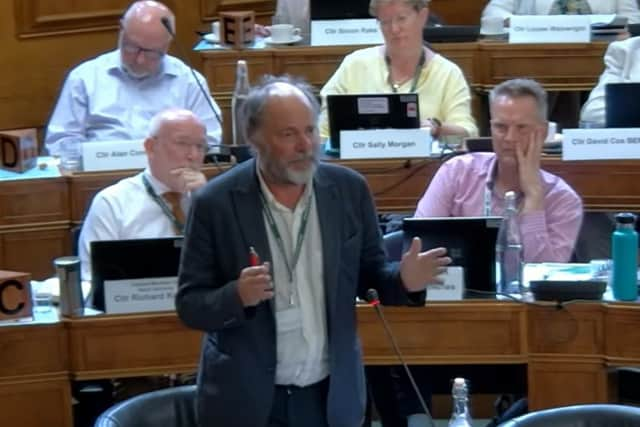
He added: "The government has shafted the rural people of Devon, who represent the vast majority of local people, because that's what their Labour mates in Plymouth and Exeter wanted. This is a deceitful betrayal of the people of Devon and will lead to double digit increases in council tax and cuts to local services. This decision will not benefit anyone in Devon." He continued: "Ironically this Labour-led gerrymandering of Devon will backfire. The people of Devon will not be hoodwinked so easily."
Cllr Brazil said the four-unitary-council model would cost around £80 million to implement and would leave a combined budget shortfall across the new councils of around £100 million. He said: "The decision to impose a reorganisation on Devon that leaves one new authority effectively bankrupt from day one puts vulnerable children at greater risk. It is a deeply flawed decision."
He confirmed County Hall was preparing to challenge the government's decision and seek a judicial review, saying: "What advice has been ignored? If we need to take legal action to stop it, then so be it." He also appealed directly to Prime Minister-in-waiting Andy Burnham to intervene, saying: "Mr Burnham has championed a broader approach to devolution, and we hope he will do the right thing for Devon by abandoning this unworkable solution." He added: "Our next Prime Minister has spoken about delivering good growth in every postcode, not just major cities. Devon gives him the opportunity to demonstrate that commitment."
The criticism comes alongside renewed warnings from Children's Services Commissioner Nigel Richardson, who has repeatedly cautioned that breaking up Devon County Council could undermine progress made in the county's children's services. In his first report in December 2025, Richardson concluded the council had both the capacity and capability to improve services and that ministers could confidently leave operational control with Devon. His most recent report, completed in April, found further evidence of progress, highlighting stronger leadership, a more stable workforce, improved outcomes for children and a culture of continuous improvement.
However, Richardson also reiterated his concerns about reorganisation, writing: "I feel it is important that I underline the serious concerns I have about the potentially negative impact any breakup of Devon would have on the significant progress being made in improving children's services across the County." He added: "The real danger is that all progress is lost almost overnight and the risks to children and families, however unintentional, increased considerably."