
RD&E appeal aims to raise £835,000 for new radiotherapy technology to end need for tattoos
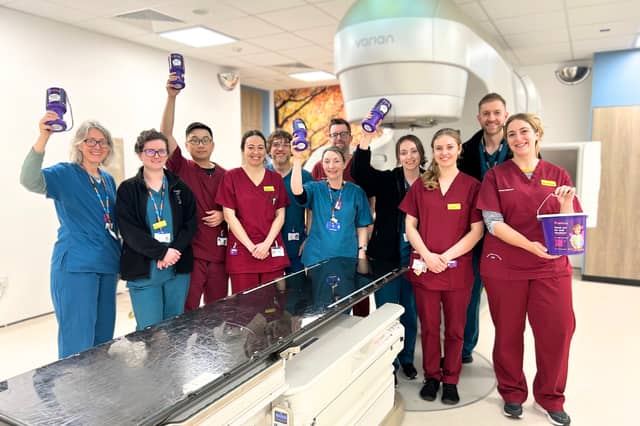

Royal Devon Hospitals Charity has launched the Light Beam Appeal to fund Surface Guided Radiotherapy cameras at the RD&E, technology that would remove the need for permanent tattoos and restrictive masks during cancer treatment.
Royal Devon Hospitals Charity has launched a new fundraising appeal to bring cutting edge radiotherapy technology to cancer patients across Devon.
The Light Beam Appeal aims to raise £835,000 to install Surface Guided Radiotherapy (SGRT) cameras across the three linear accelerator treatment rooms at the Royal Devon and Exeter Hospital (RD&E), along with an additional camera in the radiotherapy CT suite for precise breathing monitoring during motion controlled treatments.
Cancer patients from across Devon, including North Devon, travel to the RD&E for radiotherapy treatment. The charity says the technology would give patients a more comfortable experience during what it describes as one of the most difficult periods of their lives.
The technology uses light beams and cameras to create a 3D map of each patient's body, enabling faster and more accurate positioning without the permanent tattoos or restrictive immobilisation devices that many patients currently find distressing.
Jennifer Wilson, Lead Brachytherapy Physicist at the RD&E, said: "The ceiling camera continuously scans and monitors the patient's body, automatically pausing treatment if it detects any movement, or changes such as swelling or weight loss that could affect accuracy.
"Currently, patients are often fitted with immobilisation devices, including restrictive closed face masks, which can be uncomfortable and claustrophobic. Many also require permanent tattoos to guide treatment. With SGRT, patients can be quickly and accurately positioned without tattoos, and continuous monitoring means treatment can be delivered safely using less restrictive equipment."
She added: "The new technology will also enable hospitals to attract and retain the best staff, and allow implementation of future advanced techniques."
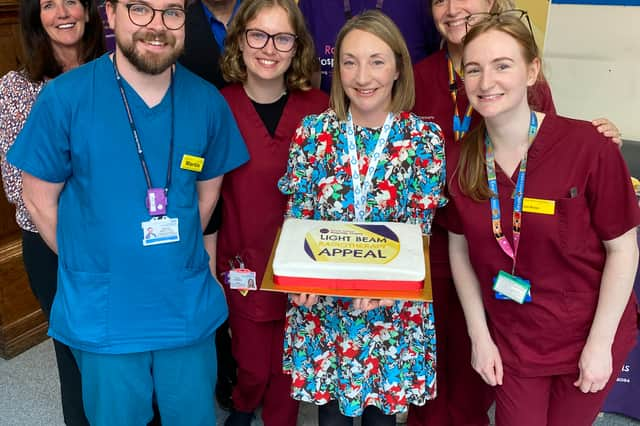
SGRT would benefit around 1,800 patients a year, but it is not currently funded by the NHS, as it is not considered essential to treatment success. The charity says this is the gap it exists to fill.
Lucy Ashton, Head of Charity at Royal Devon Hospitals Charity, said: "We want to invest in this technology to give our patients the best possible experience, in terms of comfort, speed and accuracy. The NHS does an extraordinary job, but our role is to go further.
"We know this is a significant ask of our community. But the reality is that most of us know someone who has faced cancer treatment, or will do. We hope people will stand with us to make a real difference when it matters most."
The appeal has already gained momentum, boosted by a £400,000 grant from the National Institute for Health and Care Research (NIHR). A further £25,000 donation from local cancer support charity FORCE brings the total raised so far to £425,000, more than halfway to the target.
It follows a series of previous appeals by Royal Devon Hospitals Charity, including a £1.4 million campaign for a new hybrid "Super" operating theatre at the RD&E, a £250,000 upgrade to the children's Emergency Department at the RD&E, and £50,000 for new water birthing pools at North Devon District Hospital.