
One dead nationally as salmonella outbreak cases confirmed in South West
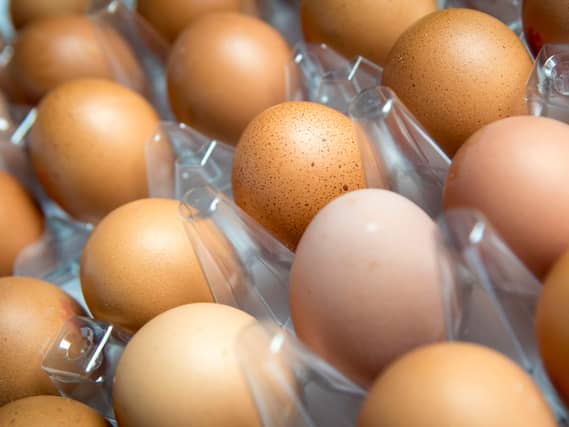

One person has died nationally in a salmonella outbreak believed to be linked to food made with imported eggs, the UK Health Security Agency has confirmed, as cases are now confirmed in the South West, though the agency says it will not confirm whether any are in Devon specifically.
One person has died nationally in a salmonella outbreak linked to imported eggs, it has been confirmed, as the UK Health Security Agency confirms cases have now been recorded in the South West.
What UKHSA has confirmed
Exeter Today contacted the UK Health Security Agency directly to ask what it knew about cases in Devon specifically.
A UKHSA spokesperson confirmed that cases have been seen in all UKHSA regions, including the South West, but said the agency was not providing a breakdown of case numbers at local authority level. Asked directly whether there had been any cases in Devon, UKHSA said it was not confirming case locations beyond a regional level.
The national picture
Exeter Today understands that, as of August 13, 207 confirmed cases linked to the outbreak had been reported across the UK. This is understood to include 199 cases in England, six in Scotland, one in Wales and one in Northern Ireland, with cases in England spanning all nine regions. The highest numbers are understood to have been recorded in London, with 47 cases, and Yorkshire and Humber, with 38 cases.
The figure of 207 cases was provided as of August 13.
It is understood that investigations into specific supply chains are ongoing, and that an update on the country of origin of the affected eggs will follow once these have concluded. UKHSA has not yet confirmed the specific supply chain involved.
It has now been confirmed that one person has died and hundreds more have fallen ill in the outbreak, which UK experts believe is linked to eating food made with imported eggs. UKHSA has not said where in the UK this death occurred.
What UKHSA is saying
Hannah Charles, lead epidemiologist for gastrointestinal infections at UKHSA, said the agency was working with the Food Standards Agency, the Animal and Plant Health Agency and other public health partners to investigate the outbreak, which may be linked to eggs imported from outside the UK.
She said salmonellosis was often caused by eating or handling contaminated food, and could rarely be spread from person to person. She said salmonella generally causes a mild illness, although people with weakened immune systems may experience more severe symptoms.
What the Food Standards Agency says
Jacquelyn McCormick, head of incidents at the Food Standards Agency, said the agency was working closely with UKHSA and other partners to investigate the outbreak of Salmonella Enteritidis.
She said the exact cause had not yet been identified, but that investigations so far had identified links to eggs imported from outside the UK, mainly used by food service and catering establishments such as restaurants and cafes, as a potential source. She said there was no evidence that UK-produced eggs were affected.
Ms McCormick said the agency's advice around eating eggs remained unchanged while investigations continued, and that eggs which were thoroughly cooked and handled hygienically should not present a food safety risk.
She said infants, young children, pregnant people and older adults should only eat runny or raw eggs if they carry the British Lion mark or are produced under the Laid in Britain egg assurance scheme, though this advice does not apply to those who are severely immunocompromised and require medically supervised diets.
She said people handling eggs, eggshells or egg packaging should continue to wash their hands thoroughly with warm water and soap, and dry them properly afterwards.
Symptoms and what to do
Symptoms of a salmonella infection include diarrhoea, stomach cramps and sometimes vomiting and fever. Ms Charles said anyone concerned about symptoms should contact their GP or an out-of-hours service in the first instance.
She said there were simple steps people could take to help prevent the spread of salmonella:
- Wash hands thoroughly after using the bathroom and before preparing or handling food
- Cook food thoroughly, particularly eggs and egg-based dishes
- Avoid handling food for others while experiencing symptoms
Those most at risk of more severe illness include young children, older people, pregnant women and anyone with a weakened immune system.
What we don't yet know
UKHSA has not said which specific brands, retailers or supply chains are implicated. The agency has also not confirmed the exact locations of cases beyond broad UK regions, and has not said where the person who died was based.
Anyone experiencing symptoms of salmonella poisoning is advised to contact their GP or NHS 111 in the first instance, and only to attend A&E if symptoms are severe.