
Gliding club to raise funds for air ambulance after member's airfield accident
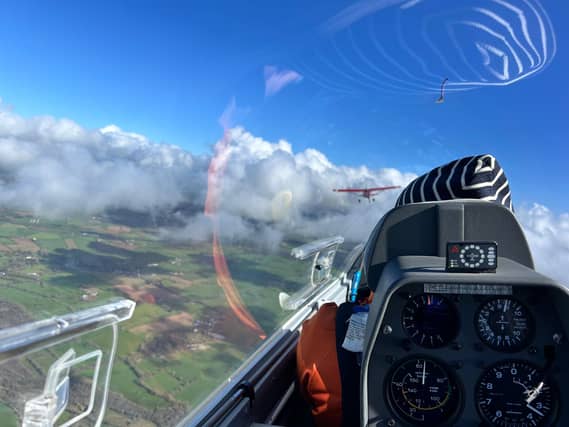

Experience a trial glider flight in Honiton. Devon and Somerset Gliding Club hosts its 2026 Charity Day at North Hill Airfield to support the air ambulance.
A community gliding club in Devon is opening its cockpit doors to the public to raise funds for the air ambulance crew that came to the rescue of one of its members.
The Devon & Somerset Gliding Club (DSGC) has announced it will host its annual Charity Day at North Hill Airfield, Sheldon, Honiton on Friday, 19 June.
The money raised during the event will be split between two local causes: hospice charity Hospiscare and the Dorset & Somerset Air Ambulance.
The decision to back the air ambulance service carries profound personal weight for the volunteer-led local organisation, following an accident at the airfield several years ago.
"We are a volunteer-led local community-based sporting organisation and we are very much aware of the part our Club can play in helping and supporting the wider community," a club spokesperson said.
"We are pleased to support Dorset & Somerset Ambulance as one of the charities benefiting from this year’s Charity Day - as there is an evident aviation connection and not least as an Air Ambulance team looked after one of our members when they had a glider accident at our airfield a few years ago."
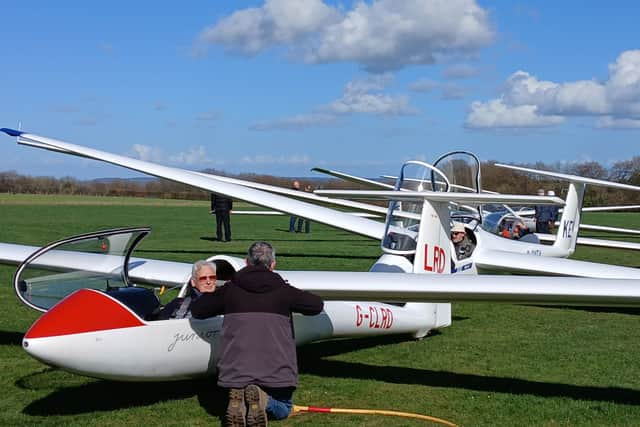
The club’s second chosen charity, Hospiscare, was selected because a number of its members have family and friends who have sadly needed the specialist support provided by the charity.
The upcoming event follows the success of the club's previous charity day, which saw a total of £1,000 donated to the Devon Air Ambulance. That total was reached through a small donation from each completed glider flight.
Organisers hope to build on that success this year by inviting visitors to experience what they describe as "the amazing sensation of silent flight, powered by nature itself."
On 19 June, visitors to the airfield will have the opportunity to take to the skies alongside experienced instructors in two-seater gliders.
The club relies entirely on natural forces like rising air currents to keep the unpowered aircraft aloft. Depending on the weather conditions on the day, visitors may be able to experience ridge lift, soar in thermals alongside local buzzards or the occasional red kite, or simply float gently back down to land.
Aspiring aviators will be able to choose between two traditional methods of getting into the air:
- The Winch Launch (£45): A powerful ground-based winch launches the glider to around 1,000 feet above the airfield for a flight of up to 10 minutes.
- The Aerotow Launch (£75): The club’s Eurofox tug aircraft tows the glider to 2,000 feet above the airfield, generally allowing for a longer flight of up to 20 minutes.
Club organisers stressed that the length of the flights remains strictly dependent on the weather conditions.
The Charity Day will also showcase the club's role as a major hub for youth development. Recognised by the British Gliding Association as a Junior Gliding Centre, the club runs dedicated training programmes for young people starting from as young as 12 years old, with DBS-checked instructors following established child protection guidelines.
Because gliding demands an understanding of atmospheric changes, young pilots quickly learn about science, weather, and how flight works.
Several junior members, some of whom are currently learning the skills to enable them to fly solo once they are 14 years or older, and some who have already flown solo, will be volunteering on the ground to help out with the event.
"Flying also helps build confidence and responsibility," the club spokesperson added.
"Our young pilots are guided by experienced volunteer instructors who teach them not only how to fly but also how to make good decisions and stay safe - many teenagers are able to quickly take control of a glider which gives them a real sense of achievement and independence."
According to the club, many young people who started their flying journey in gliders at the club have gone on to fly powered aircraft large and small, as well as helicopters.
What you need to know if you want to book
Weather permitting, flying starts from 9am. The day is divided into one-hour slots. While a specific flight time is not guaranteed, visitors who arrive for an introductory briefing 30 minutes before their chosen time slot will be arranged into a reasonable flying sequence.
Organisers state visitors should expect to be at the club for a minimum of around 90 minutes. The clubhouse cafe will remain open all day for families and friends. Bookings can be made online via the club's website.
The club notes that most people can glide, but the following cockpit limitations apply:
- Weight: Those heavier than approximately 16 stone (224lbs/102kg) approach the weight limit for the training gliders and may not be able to fly. Scales are kept at the launch point to check weight.
- Height: Those under 5ft (1.52m) tall may find it difficult to reach some controls, though adjustable backrests and pedals are available. Those taller than 6ft 4ins (1.93m) may find some gliders lack enough leg or headroom.
- Age: There is no upper age limit, though fitness and mobility can be factors. Children under 18 require permission from a parent or guardian. For younger children, physical size is the main factor as safety straps must fit securely. The legal age limit to fly solo is 14.
- Fitness: The general rule for a trial experience is that if you are fit enough to drive a car, you are fit enough to fly a glider.