
Devon doctor wins international award for pioneering diabetes research
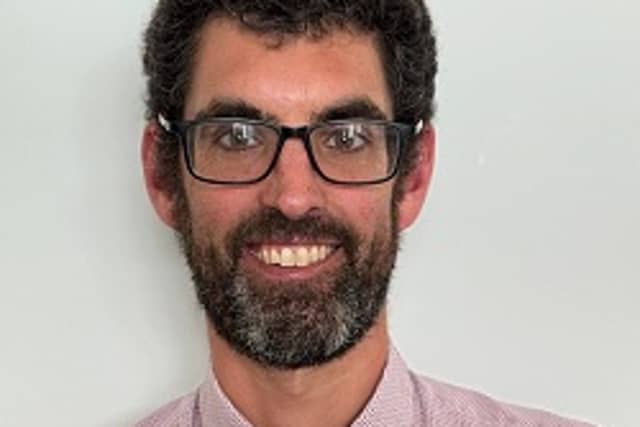

An Exeter consultant has been awarded a prestigious European fellowship to advance research into early-stage type 1 diabetes in adults.
An Exeter consultant has received a prestigious international award in recognition of his work improving the understanding of early type 1 diabetes.
Dr Nick Thomas, a diabetes consultant at the Royal Devon and academic clinical lecturer at the University of Exeter, has been awarded the 2026 European Association for the Study of Diabetes (EASD) Rising Star Symposium and European Foundation for the Study of Diabetes (EFSD) Rising Star Research Fellowship Programme prize.
The programme, supported by Novo Nordisk, aims to identify promising young researchers in Europe. It will allow Dr Thomas to present his ongoing work at a research symposium at the EASD Annual Meeting in Milan and provide a fellowship to support further research.
Dr Thomas was recognised for his research into adults with early type 1 diabetes. The award funding will support his study of 10-year patient outcomes in adults who have islet autoantibodies, early markers of type 1 diabetes that can appear before a formal diagnosis.
His research will look at patients who were treated without knowing they had these markers. By looking at stored samples, Dr Thomas will study how often adults without diabetes who show these early signs go on to develop the condition and require insulin. He will also investigate whether basic patient information and genetic tests can help predict who will need insulin soon after diagnosis.
"I am motivated to turn research on presymptomatic type 1 diabetes into meaningful changes in clinical practice, improving patient care," Dr Thomas said.
"This funding will enable me to develop specialist expertise in identifying and managing adults who are autoantibody positive before and at the point of diabetes diagnosis. This group does not always need insulin straight away, and there is currently limited evidence-based guidance to support them."
He added that addressing this critical gap supports both improved patient care and more precise, personalised treatment decisions. From a career development perspective, he noted the award would help establish his independence as a clinical academic and support his progression towards becoming an international leader in managing early-stage type 1 diabetes in adults.
Dr Thomas’s research contributions previously led to the first adult in the UK trialling a new drug for type 1 diabetes in July 2025.
Devon-based dentist and mother of two, Hannah Robinson, discovered during pregnancy that she was in the early stages of developing type 1 diabetes. Taking the trial drug could potentially extend the time before she needs to take regular insulin injections by up to three years.
Around 4.6 million people in the UK have diabetes, with more than 270,000 living with type 1. There is currently no cure, and most individuals require daily insulin to manage their blood sugar levels and reduce the risk of complications.
Dr Thomas and fellow experts at the Royal Devon and the University of Exeter are leading research into using genetics combined with autoantibody testing to spot individuals at high risk of developing type 1 diabetes.
The work supports the NHS’s long-term goal of helping people live longer, healthier lives by treating illness early on and finding new ways to prevent and treat diseases.
The research is supported by the NIHR Exeter Clinical Research Facility, the NIHR Exeter Biomedical Research Centre and the NIHR HealthTech Research Centre in Sustainable Innovation. Two trials are currently open to recruitment, offering islet autoantibody testing: the ELSA study for children, and the T1DRA study for adults.