
Network Rail outlines multi-million pound plan to double Tarka Line services
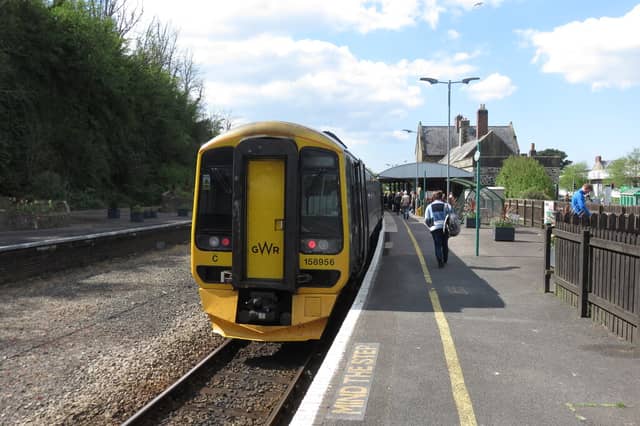

Network Rail outlines Tarka Line expansion to tackle "unacceptable" delays and overcrowding on Barnstaple to Exeter route
Network Rail has unveiled a major blueprint to transform the Tarka Line, proposing an uplift to two trains per hour to tackle chronic overcrowding and “unacceptable” passenger delays.
It says this would also release demand suppressed during peak times through lack of capacity.
The Tarka Line, which connects Barnstaple to Exeter, has become a victim of its own success.
According to a newly released PACE A (Project Acceleration in a Controlled Environment) engineering report, passenger numbers have surged by 600,000 in just five years, with growth now exceeding pre-pandemic levels.
However, the infrastructure, much of which remains a single track following 1970s “rationalisation”, has reached a breaking point.
The report paints a stark picture of the daily commute for North Devon residents.
Morning services heading into Exeter are now frequently observed to be operating as “full and standing from Barnstaple,” with the report noting that passengers are increasingly being “left behind” on platforms at intermediate stations.
With significant housing developments committed in Barnstaple and the Greater Exeter area, the rail body warns that the current hourly service is a bottleneck for the region’s economy. “This situation is therefore limiting connectivity growth in North Devon and the Exeter city area,” the report states, adding that the lack of flexibility is a major deterrent to “modal shift” from cars to rail.
The document highlights the human cost of the current setup: congested roads and limited bus alternatives contributed to an average of 46 work hours being lost per person over the last year.
A central pillar of the plan is the removal of the line's “outdated” signalling system.
Currently, much of the route relies on “token working,” a traditional method where drivers must physically carry a baton to prove they have permission to enter a section of single track.
Engineers have branded this “impractical” for a modern high-frequency service because it adds significant time and inefficiency to every journey.
The proposal recommends a “tokenless block” enhancement, using digital axle counters and modern colour-light signals.
This would allow trains to follow each other more closely and safely.
While the report mentions the potential for the high-tech European Train Control System (ETCS), it suggests that more immediate benefits could come from modernising the existing control point at Crediton Signal Box, potentially upgrading it to a new digital workstation.
The Three Key Engineering “Interventions”
To achieve the goal of two trains per hour (2tph) throughout the day, the PACE A report identifies three critical infrastructure projects:
- Reinstating the “Double Track” A key part of this involves reinstating Coleford Junction with a high-speed crossover designed for 70mph, ensuring that Barnstaple-bound trains do not have to slow down significantly when diverging. Engineers also propose re-laying a second track between Newton St. Cyres and Crediton. This would effectively “un-bottle” the start of the line, allowing Barnstaple and Okehampton services to pass each other without one having to wait for the other to clear the single-line section.
- Strategic Passing Loops: To avoid the massive cost of doubling the entire 39-mile line, the report identifies three strategic “passing loops”, short sections of double track where oncoming trains can pass each other at speed:
- Morchard Road to Lapford: A new loop placed on straight track to allow for maximum speed.
- Kings Nympton to Portsmouth Arms: A stretch that would ensure uniform departures from Barnstaple, preventing the “clumping” of services.
- Chapelton to Barnstaple: Extending the double track into the Barnstaple terminus, allowing for a second operational platform or stabling for longer trains.
- The Speed Challenge The report isn't just about frequency; it’s about speed. While current journey times to Exeter can exceed an hour, engineers believe that increasing line speeds to 75mph or 85mph is possible between Yeoford and Barnstaple. However, this would require “gauging and strengthening” work at multiple overbridges and historic timber bridges that were not originally designed for the physical forces of faster, heavier trains.
Level Crossing Safety and Station Upgrades
With more trains running, level crossing safety becomes a priority.
The report notes that an increase in frequency naturally increases the risk at crossings. It recommends a £6.5 million investment to upgrade “user-worked” crossings.
Specific recommendations include moving the Salmon Pool crossing to a “manually controlled” system with CCTV or obstacle detection, removing the need for trains to slow down as they approach the crossing.
The plan also looks at the Devon Metro vision, which may require lengthening platforms at several stations to accommodate a new fleet of GWR trains expected in the 2030s.
This includes potential extensions at Copplestone (37m), Lapford (46.5m), and Eggesford (up to 70m).
The project faces significant environmental hurdles.
The North Devon Line follows the valleys of the rivers Taw, Yeo, and Creedy, leaving it at high long-term flood risk.
The report explicitly references “significant disruption to services on the line resulting from flood-related scour damage in 2026,” highlighting the need for robust drainage and earthwork improvements as part of any upgrade package.
While the “PACE A” status means this is a high-level feasibility study designed to accelerate through traditional bureaucracy, it is not a final guarantee of funding.
The next steps involve a detailed “Advance Timetable Analysis” to see how the proposed layout handles a full daily schedule.
For the thousands of passengers currently squeezed into short-formed trains, these proposals represent the most ambitious vision for the North Devon rail network in over half a century.